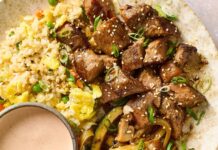



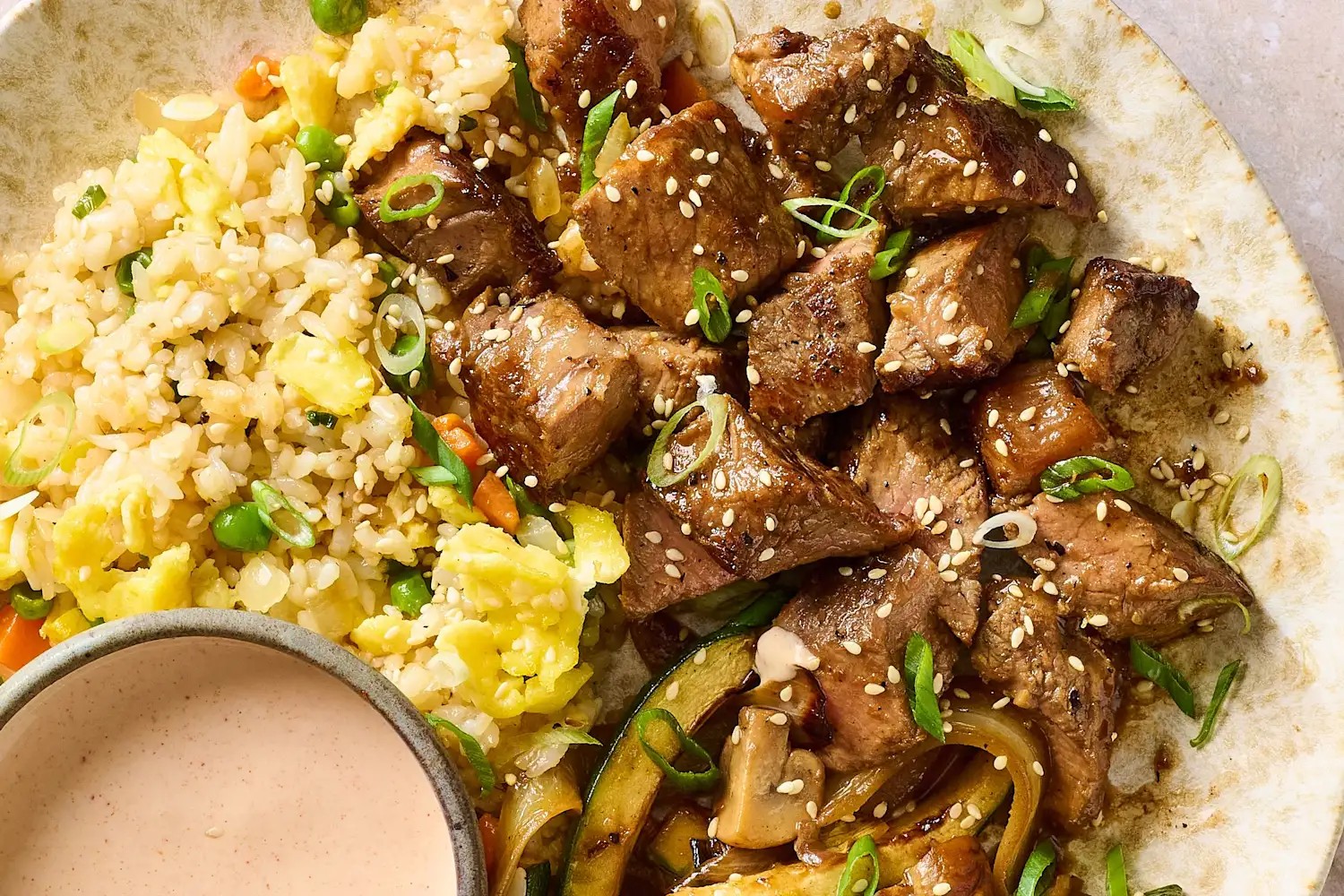
For many, a visit to a hibachi steakhouse is more than just a meal; it is a theatrical event reserved for birthdays, anniversaries, and special celebrations. The combination of high-heat searing, rhythmic chopping, and the iconic “onion volcano” creates an experience that is hard to replicate in a standard kitchen.
However, thanks to the rise of outdoor griddles and high-quality kitchen tools, you no longer need a reservation to enjoy these Japanese-inspired flavors. By focusing on three key components—soy-garlic butter, authentic fried rice, and a homemade signature sauce —you can recreate that restaurant-quality feast in your own home.
Зміст
🔑 The Secrets to Restaurant-Quality Flavor
To achieve the specific taste profile of a professional hibachi chef, three elements are non-negotiable:
- The Cut: A New York strip steak is the gold standard here. Its ideal marbling and fat content allow it to sear beautifully while remaining tender.
- The Fat: Most of the “magic” in hibachi comes from a soy-garlic compound butter. This infused fat coats the steak, vegetables, and rice, providing a deep, savory richness that plain oil cannot match.
- The Rice: Using medium-grain Japanese rice (like Calrose) is essential. Its slightly sticky texture ensures the fried rice holds together, mimicking the mouthfeel found in professional teppanyaki restaurants.
📝 Recipe Overview
- Serves: 4
- Prep Time: 30–40 minutes
- Cook Time: 35–40 minutes
- Difficulty: Intermediate (requires multitasking)
🛒 Ingredients List
For the Hibachi Steak & Vegetables
- Steak: 2.5 to 3 lbs boneless New York strip (approx. 1-inch thick)
- Vegetables: 1/2 white onion (half-moons), 8 oz white button mushrooms (halved), 2 medium zucchini (matchsticks)
- Seasoning: Kosher salt, black pepper, 3 tsp neutral oil (vegetable or canola), 1.5 tbsp soy sauce (or tamari)
- The Butter: 1 stick (8 tbsp) unsalted butter, 2 cloves grated garlic, 2 tsp soy sauce
For the Signature Hibachi Sauce
- 1 cup mayonnaise (Kewpie preferred)
- 1 tbsp ketchup
- 1 tbsp mirin
- 1.5 tsp rice vinegar
- 1 tsp garlic powder
- 1/2 tsp paprika
- 2 tbsp water
For the Fried Rice
- 2 cups day-old cooked medium-grain Japanese rice
- 1 cup frozen vegetable medley (peas, carrots, corn, beans)
- 2 large eggs, lightly beaten
- 1/2 white onion, finely diced
- 1 scallion, sliced
- 2 tbsp soy-garlic butter (from above)
- 1 tbsp soy sauce, salt, and pepper
👨🍳 Step-by-Step Instructions
1. Preparation (The “Mise en Place”)
Because hibachi cooking happens very quickly over high heat, you must prepare everything beforehand.
* Make the Soy-Garlic Butter: Smash room-temperature butter with grated garlic and 2 tsp soy sauce until smooth.
* Make the Sauce: Whisk all sauce ingredients together and refrigerate. Pro tip: Making this a day ahead allows the flavors to meld.
* Prep the Steak: Pat the meat dry and season generously with salt and pepper.
2. The Fried Rice
- Scramble: Heat 1 tsp oil in a large skillet. Scramble the eggs until just set, then remove to a bowl.
- Sauté: Heat 1 tsp oil; sauté diced onion and frozen veggies until heated through. Stir in sliced scallions and add to the egg bowl.
- Fry: Heat 1 tsp oil; add the day-old rice. Break it up and cook for 3 minutes.
- Combine: Return eggs and veggies to the pan. Add 2 tbsp of the soy-garlic butter and 1 tbsp of soy sauce. Toss until everything is coated and fragrant. Keep warm in a 200°F oven.
3. The Steak and Vegetables
- Sear the Steak: Heat 1 tsp oil in a skillet over medium-high. Sear the steak for about 3 minutes per side until golden brown. Remove, let rest, and cut into bite-sized pieces.
- Sauté Veggies: In the same pan, heat 1 tsp oil. Sauté onions, mushrooms, and zucchini with 2 tbsp soy-garlic butter and 1 tbsp soy sauce until the zucchini is tender-crisp. Transfer to a dish to keep warm.
- Finish the Steak: Return the steak pieces and any juices to the skillet. Add the final 1.5 tsp of soy sauce and the remaining 1 tbsp of soy-garlic butter. Sauté for 1–2 minutes until the steak reaches your desired doneness.
💡 Chef’s Tips for Success
- The “Day-Old” Rule: Always use cold, leftover rice for fried rice. Freshly cooked rice is too moist and will turn into a mushy paste in the pan.
- Temperature Control: Ensure your soy-garlic butter is at room temperature before adding it to the pan; cold butter will drop the pan temperature too quickly and prevent a proper sear.
- Easy Swaps:
- No Japanese rice? Use Jasmine rice, though it will be less sticky.
- No New York Strip? Flank steak or top sirloin work well, but watch your cooking times closely.
Final Thought: While you might lack the theatrical flair of an onion volcano, the combination of high-quality fats and precise seasoning ensures this meal delivers a professional dining experience right at your kitchen table.