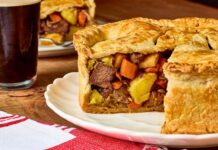


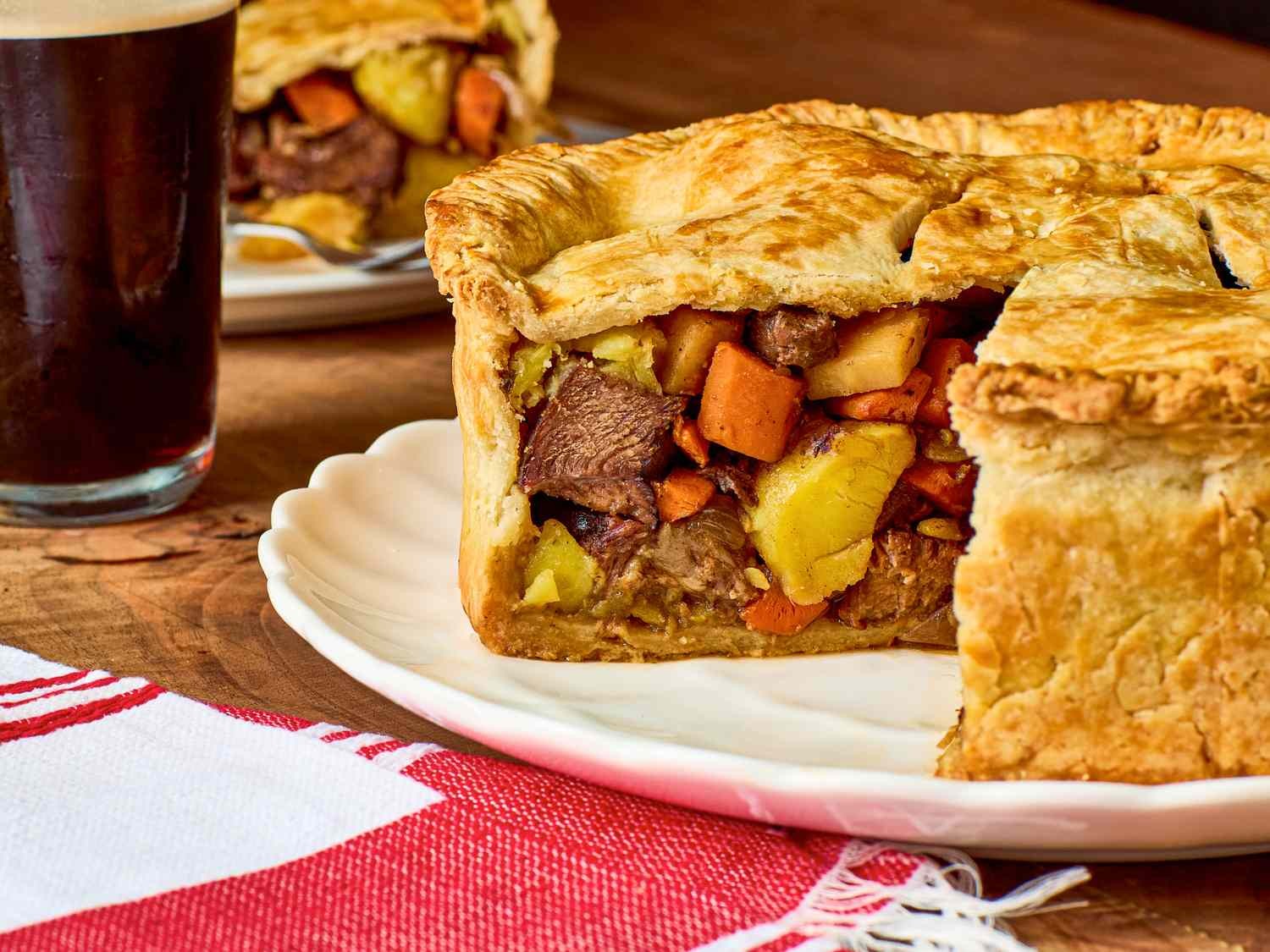
For many Americans, “pie” conjures images of apple, pumpkin, or pecan, sweet and flaky delights. Yet, across the Atlantic, in Britain, “pie” traditionally means something altogether different: a hearty, savory creation brimming with meat and encased in a robust, stand-alone crust. This isn’t a dessert; it’s a meal built for portability and preservation. The key to this difference? Hot-water crust, a technique that defies conventional pie-making wisdom.
Зміст
A History Rooted in Practicality
The origins of the British pie lie deep in the Middle Ages. Early pies weren’t about taste; they were about necessity. The thick, inedible crusts served as the only form of baking container, a portable lunchbox, and a primitive method of preserving food before refrigeration. These “coffins,” as they were called, were inches thick, meant to protect the contents, not to be eaten with them. Over time, cooks began adding fat – lard, suet, or butter – to the dough, making the crust both palatable and structurally sound.
This evolution highlights a fundamental shift: from a disposable container to an integral part of the dish. The modern hot-water crust is a direct descendant of this practical past, engineered for strength rather than flakiness.
Why Hot Water? The Science Behind the Strength
Traditional pie dough relies on cold ingredients and minimal handling to create tender, flaky layers. Hot-water crust flips this script entirely. The process involves simmering water and fat, then incorporating them into the flour. This pre-gelatinizes the flour’s starches, allowing them to absorb more liquid without becoming soggy. The result is a pliable, kneadable dough that develops gluten – the protein network that provides structure.
As Andrew Janjigian of Serious Eats explains, this is a form of “stealth hydration.” The extra water is present, but the dough doesn’t feel soup-like because the starches have already begun to swell and bind. This technique creates a dough that’s smooth, strong, and capable of holding its shape even without a baking pan.
Fat Matters: Lard Reigns Supreme
Testing revealed a surprising truth: lard produces the best hot-water crust. Butter, with its water and milk solids, yields a tougher result. Lard, being 100% fat, inhibits gluten development more effectively, creating a crisp, tender bite. This is why traditional British recipes favor lard or beef suet.
While vegetable shortening is also 100% fat, it lacks the subtle savory flavor of animal fats. The key takeaway? For maximum strength and tenderness, lard is non-negotiable.
Flour Choice: Strength in Numbers
To achieve a truly sturdy crust, use a high-protein all-purpose flour. Flour with 11–12% protein content provides the gluten structure needed to support heavy fillings. Brands like King Arthur Baking, Hecker’s, and Kirkland Signature Organic offer suitable options. This isn’t about creating a tough crust; it’s about ensuring it won’t collapse under pressure.
Working Warm: A Unique Advantage
Unlike flaky pie dough, hot-water crust is best used immediately while still warm. As it cools, the fat solidifies, making the dough crumbly and harder to handle. Rolling between parchment paper prevents sticking and minimizes extra flour. Tears and cracks can be patched seamlessly – a testament to the dough’s forgiving nature.
Conclusion
Hot-water crust isn’t just a recipe; it’s a historical artifact of practicality, adapted for modern kitchens. It stands in stark contrast to the delicate flakiness of American pies, prioritizing structural integrity over melt-in-your-mouth tenderness. From medieval practicality to hearty British meals, this technique remains a testament to the ingenuity of food preservation and the evolution of culinary traditions.