


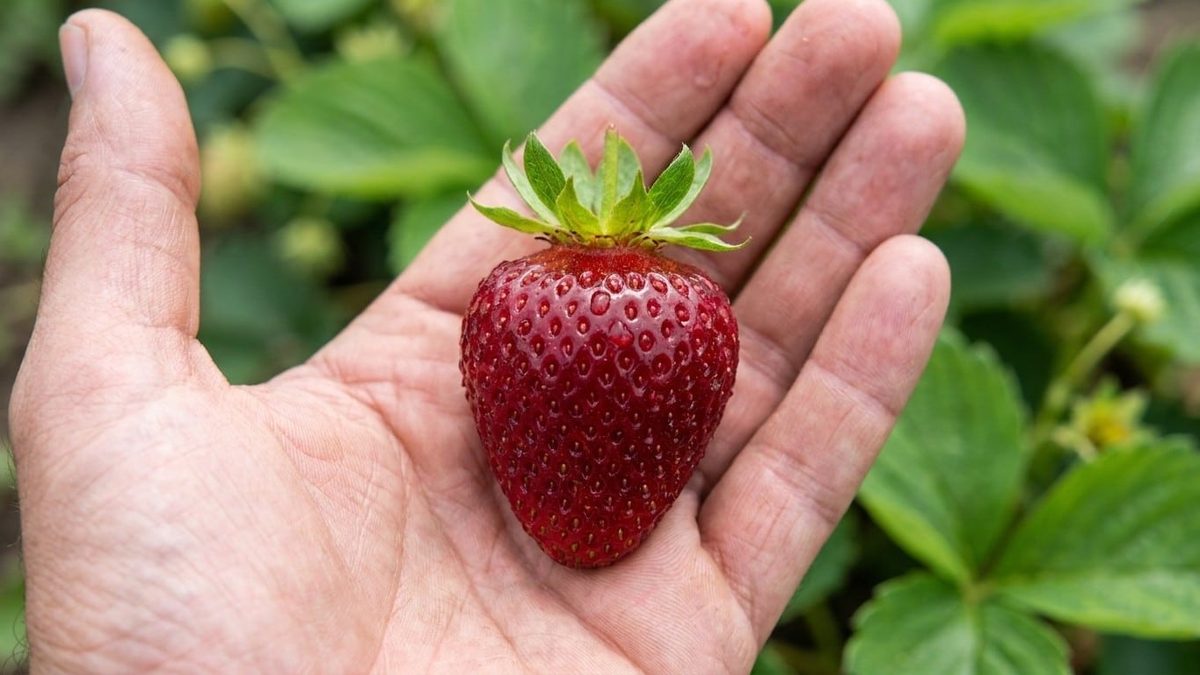
这一切都归结为一件事:时间 。
咬一口当天早上采摘的加里盖特,你就会品尝到春天的巅峰。 是季节的集中爆发。 咬一口从超市货架上买的装在塑料翻盖里的同一种品种吗? 您正在品尝经过数天的物流、冷藏和供应链断裂后剩下的东西。 标签上也这么说。 形状就是那熟悉的拉长的朱红色。 但这不是同一种水果。
Зміст
The Paradox of Frozen Ripeness
Here’s the hard truth about how strawberries ripen : Unlike tomatoes and pears, strawberries stop ripening when they are removed from the vine.
Once picked up, the metabolism slows down. No extra sugar should be added. No new scents are created. New colors cannot be formed. All the fruits they have to offer are locked during harvest. A great challenge game is played here. If a strawberry is picked green during the journey, its spirit will remain green forever, regardless of color. This is the main argument against industrialized strawberries, as they are often harvested early to survive shipping.
Gariguette knows this. It does not forgive.
Developed at INRA in Montfavet in 1976, this variety lay dormant for several years before becoming a French spring staple. It now accounts for more than 44 percent of French production. Named after the experimental site of Les Garriges in Provence, it was born in the bush and designed to taste the earth rather than the cargo of a refrigerated truck.
But the problem is that it is fragile. It hates transport.
A Gariguette in the local market has traveled for several hours. One in a supermarket walk through the logistics platform, wait in the warehouses and sit in the cold aisles. result? It takes 5-7 days for it to reach your mouth from the vine. The smell evaporates in that window. The meat begins to decompose. Ideally, Gariguettestte should be consumed within 48 hours of purchase. After that, it loses its texture and subtle aroma, even when stored in the refrigerator.
Industrial Circuits Choose Volume Over Flavor
Look at the strawberry aisle of a large supermarket. It looks like a complete, uniform directory. This is no accident.
Elsanta is the most produced strawberry in Europe. It is firm. It’s shiny. It has the perfect red color. It lasts a long time. How does it taste? A vaguely remembered mixture of water and strawberries. It’s designed for the supermarket, not for your taste. The same logic applies to its cousins Fortuna, Sabrina and Lara. volume. yield. Shelf life. Taste is the last variable in the equation.
Most of the production is based on hydroponics. Strawberries are grown on artificial substrates, such as rockwool or coconut fiber, in troughs, often in heated greenhouses. The producer controls everything: temperature, watering, fertilization. It grows regularly. If you want, you can grow it all year round.
However, this system cannot reproduce what happens in the soil. A strawberry plant in the ground interact with microorganisms. It connects with mycorrhizal fungi. It taps into the soil fauna. It is derived from complex minerals that cannot be replicated by synthetic irrigation. Fruits grown in soil take longer to ripen. More aromatic compounds such as esters, alcohols and aldehydes accumulate and become a recognizable perfume.
What about Spanish strawberries, which are available in stores from January to March? Cultivated mainly in the Huelva region, they were cultivated on a large scale to fill the off-season before Gariguettes arrived in France. In April, French strawberries grown in greenhouses can be found in the south and in Provence. Their taste is significantly more mature than the imported, intensively cultivated and sometimes also soil-less alternatives.
What Your Nose Knows Before Your Tongue
嘘をつかないサインは匂いです。 匂いが第一の基準です。
バッグやプラスチック容器に身を近づけてください。 20センチ離れたところからイチゴの香りがしたら、それは良い兆候です。 ラップの下の容器に匂いがなければ、それが何であるかを正確に示します。収穫が早すぎ、色素反応によって「赤くなった」ものの、香りが放出されなかった果物です。
茎の近くの果実の上部を確認してください。 まだ色が薄い場合は、収穫が早すぎました。 その風味は完全に発展することはありません。 イチゴは収穫後に糖を生成しないため、この欠陥を家庭で修正することはできません。 「熟成を終える」ために室温のボウルに入れても、何も変わりません。
「1週間日持ちするイチゴは、真の地域固有のGariguetteではありません。」
—ロット・エ・ガロンヌ県の生産者
もう一つの古典的な罠、それは寒さです。 冷たすぎるイチゴを食べると、味覚が麻痺し、香りが隠れてしまいます。 Gariguettesは、元の包装のまま冷蔵庫に 48 時間以上保管しないでください。 風味を戻すため、食べる20分前に取り出してください。 これは細かいことのようです。 特に、買ったばかりのものと今味わったものを正直に比較したい場合には、すべてが変わります。
When and where to find real gariguette strawberries
If you’re looking for a true gariguette strawberry, you’ll have to be quick. The season doesn’t wait.
It starts in mid-April in Nouvelle-Aquitaine, especially in Dordogne and Lot-et-Garonne. These two departments alone produce more than 15,000 tons per year. This is the heart of the harvest. From there, the harvest moves north over the course of weeks. But here’s the catch: the window is small. Six to eight weeks. That’s it.
Because it is so short, large industrial farmers cannot compete. They don’t have time to scale up. They bypass the Gariguette entirely. For this reason, they are rarely seen in regular supermarkets throughout the year. They are not designed to last. They are designed for flavor, and the flavor doesn’t spread well.
Stick to short supply chains
The producers have a clear recommendation: go local. Visit a farmer’s market. Buy from direct-to-consumer circuits. When you do that, you get a level of transparency that you can’t get online.
There are varieties that never make it to the big stores. Raised on a human scale. Harvested the same day they’re shipped. No long distance trucking. No preservatives. No cold storage hangovers. Only fruit that knows will make it to the plate in hours, not days.
The paradox of fragility
Here is the part that most people miss. The Gariguette’s intense aroma is also its undoing.
There is a very fine line between perfect ripeness and overripeness. The more fragrant the berry, the softer it is. It’s a paradox. Its legendary taste brings with it extreme fragility.
Think of it this way: If a strawberry sits in your fridge for a week without bruising or losing its shape, it’s not a Gariguette. Hardy fruit that survives the journey has likely sacrificed flavor for durability. Hardness is the enemy of taste.
Do you want a scent? You accept the risk. You accept that it may not last. That’s the compromise. And for many, it’s worth it.