



I used to grab whatever melon looked greenest and hope for the best. Big mistake.
Summer is supposed to be about sweet, juicy treats, not watery disappointments. That changed last year when I stopped guessing and started looking closer. I learned the two-finger rule for ripe watermelon, a trick approved by farmers that takes the guesswork out of the produce aisle.
It’s not about thumping. It’s not about sniffing. It’s visual. And it works every time.
Зміст
How the Two-Finger Rule Works
Here is the logic. As a watermelon grows and ripens on the vine, the fruit expands. This expansion causes the dark green stripes on the rind to pull apart. The pale green areas between those stripes widen.
If the melon isn’t fully ripe, the stripes are still crowded together.
To check, hold two fingers up side-by-side. Place them lengthwise against the rind. Look at the darker green stripes. Is the space between them wide enough to fit both fingers? If yes, you’ve got a winner.
“You want there to be at least two fingers’ worth of space between the strips so you knows it’s ready. Any smaller one isn’t ripe enough,” says Kim, a local farmer I consulted for this.
It sounds too simple. I thought so too. I’ve heard tips about yellow patches and hollow sounds before. They often fall flat. This one felt different because it’s tied directly to the physical growth of the fruit.
The Taste Test: One Finger vs. Two Fingers
Theory is nice. Results are better.
I took this to my local grocery store. I found two melons that looked similar on the outside. I put them in my cart.
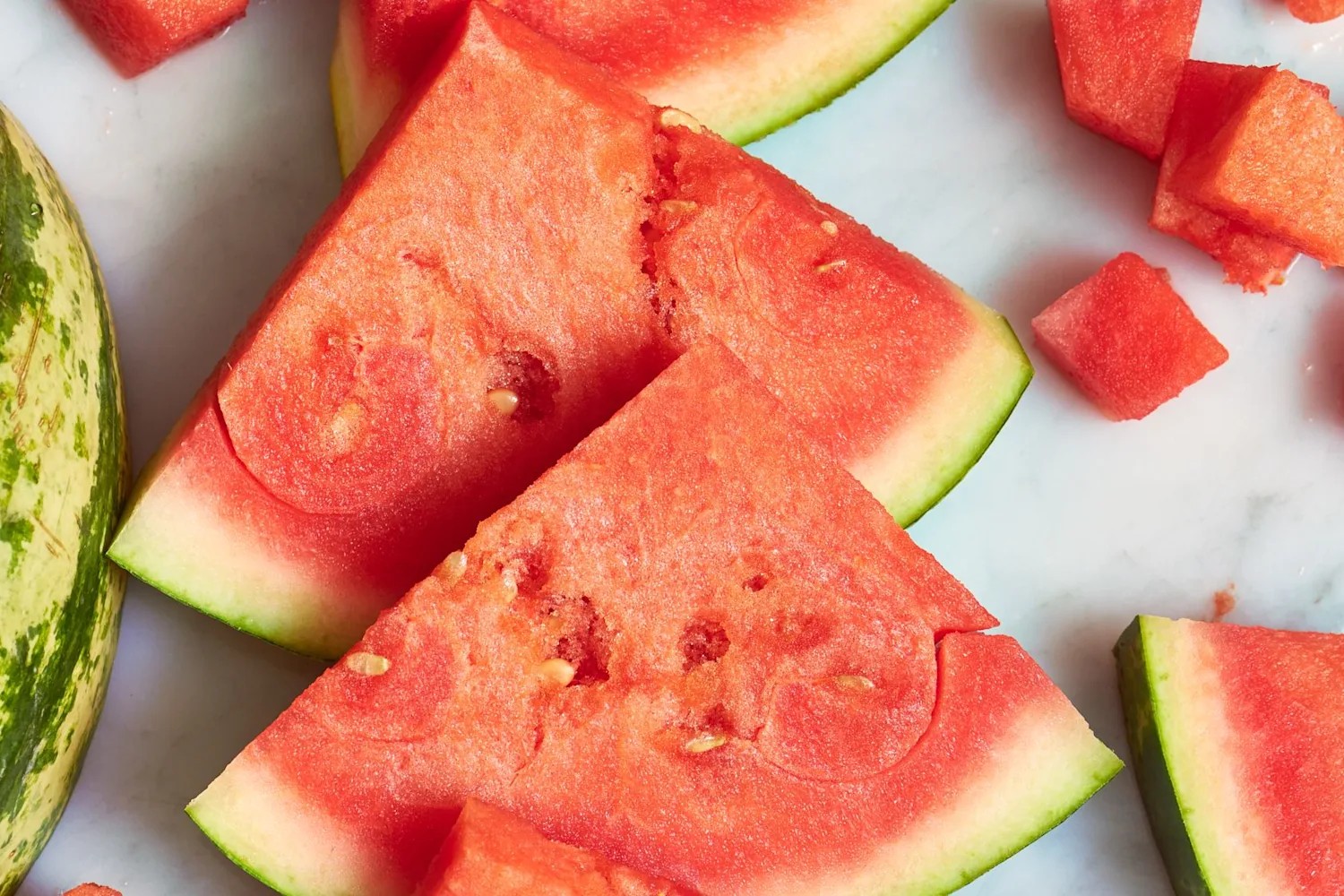
Back in the studio kitchen, I cut them open. Both were pink. Both looked fleshy. They were indistinguishable at a glance.
Then I took a bite of the “one-finger” melon. It tasted like… water. There was almost no sweetness. Just wet texture with a hint of flavor. Boring.
I switched to the “two-finger” melon.
The difference was instant. Juicy. Sweet. That satisfying crunch that makes you forget you’re eating something so simple. I even had juice dripping down my forearm.
One was a snack. The other was a reward.
Why Visual Cues Beat Thumping
You don’t need a degree in horticulture to know why thumping fails. It’s subjective. Is that a deep thud or a dull thump? Who knows?
The stripe spacing is objective.
When a watermelon ripens, sugars accumulate. The flesh firms up. The rind expands. The widening gap between stripes is a physical marker of that maturity. If the gap is too small, the fruit hasn’t had enough time to develop those sugars or the proper texture.
Mackenzie, a contributor who helped verify this with farmers and store managers, noted that this is the key to picking a “winning melon” without relying on outdated myths.
It’s fast. It’s accurate. It takes three seconds.
Stop Guessing, Start Choosing
I don’t know about you, but I’m done with average watermelons. The stakes are too high for summer.
Next time you’re standing in front of the bin, forget the thumping. Look at the stripes. Measure the gap.
If it fits two fingers, take it home. If it doesn’t, put it back.
Your taste buds will thank you. And if you try this, tell me how it worked. Better yet, do you have a better trick? Share it in the comments. The search for the perfect summer snack continues.