



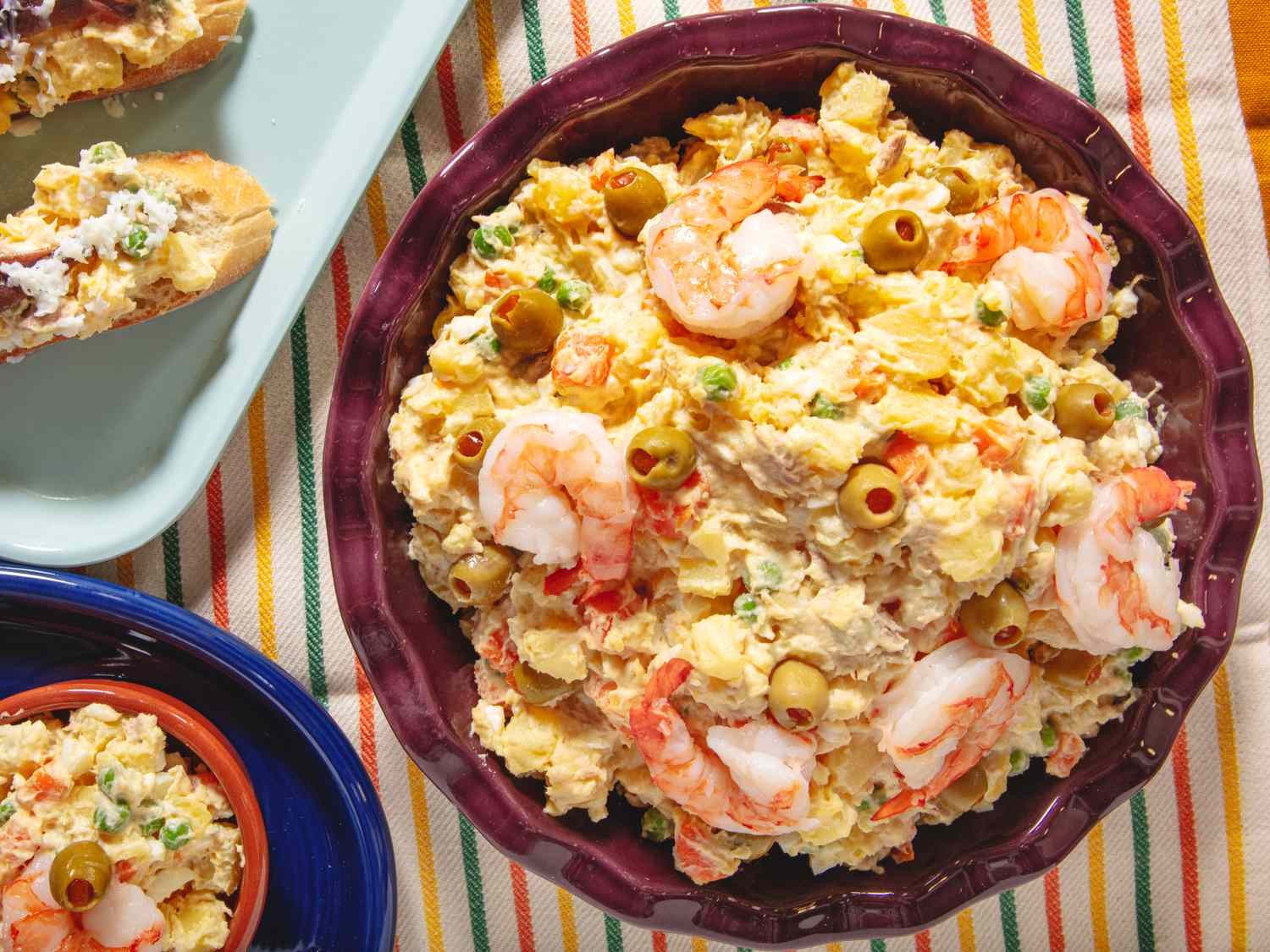
In the bustling atmosphere of Spain’s finest barra de tapas, the visual spectacle is often dominated by hanging legs of jamón, glistening marinated anchovies, and sizzling garlic shrimp. Amidst this sensory overload sits a dish that defies the glamour: ensaladilla rusa. Pale, cold, and unassuming, this “little Russian salad” may look like a humble potluck contribution, yet it holds a revered place in Spanish culinary culture.
Зміст
A Tangled Lineage from Moscow to Madrid
The name ensaladilla rusa reveals its complex origins. The dish is a distant cousin of Olivier salad, created in the 1860s by Lucien Olivier, a chef of French or Belgian descent working at Moscow’s Hermitage restaurant. According to food scholar Darra Goldstein, Olivier’s original recipe was a closely guarded secret, but early published versions were luxurious affairs featuring grouse, crayfish, aspic, and capers alongside potatoes and aioli.
As the recipe traveled and evolved, it shed its aristocratic ingredients for accessibility. During the Soviet era, it transformed into a staple of everyday life, relying on cheaper staples like potatoes, peas, pickles, eggs, and processed meats. This adaptability allowed the salad to spread across the former Soviet bloc and beyond, taking on local identities:
* Iran: Salad Olivieh, often featuring chicken.
* Italy: Insalata russa.
* Turkey: Rus salatası.
* Romania: Salată de boeuf.
In Spain, however, the salad underwent a distinct transformation. It shifted from a meat-heavy dish to one leaning heavily into seafood and briny flavors, incorporating tuna, olives, roasted peppers, and hard-boiled eggs. This evolution cemented its status as a essential tapas bar menu item.
From Austere to Theatrical
The presentation of ensaladilla rusa varies wildly depending on the region and the establishment. In many traditional bars, it is served simply: a scoop of the creamy mixture topped with a few olives or anchovies. In others, it becomes a theatrical centerpiece, crowned with shrimp, tinned seafood, or piparras (slender pickled chilies).
In the Basque Country, the dish takes on the form of a pintxo (a small bar snack served on bread). Here, the salad is mounded onto slices of baguette and finished with artistic touches like grated egg whites or a single anchovy. At Bar Ganbara in San Sebastián, a renowned pintxo bar, the ensaladilla rusa is presented as a towering, sculptural mound of seafood and salad. This elaborate display, which diminishes throughout the day as patrons help themselves, evokes the meticulous entertaining styles of the mid-20th century.
The Secret to Perfect Texture
Despite the endless regional variations, the best versions of ensaladilla rusa share specific technical qualities. The key lies in the texture. Unlike many American potato salads that feature distinct chunks, the Spanish version aims for a creamy, cohesive consistency where the ingredients are finely chopped and almost spreadable when folded with dressing.
To achieve this, the preparation method matters:
1. Cooking Whole: Potatoes and carrots are often cooked whole before peeling and chopping. This prevents them from absorbing too much water and becoming mushy.
2. Potato Choice: Yellow potatoes are ideal due to their naturally buttery texture, which allows them to remain tender without turning dry or crumbly.
3. Integration: Hard-boiled eggs are finely chopped so they blend seamlessly into the dressing, contributing to the soft, unified texture.
4. Dressing: While homemade aioli is traditional, a high-quality mayonnaise brightened with sherry vinegar provides the necessary rich, tangy balance with less effort.
A Comforting Classic
Whether served by the spoonful, topped with poached shrimp, or mounded on bread as a pintxo, ensaladilla rusa remains a testament to culinary adaptation. It is a dish defined by its cool, creamy, and briny profile, designed to be enjoyed slowly with cold drinks at crowded tables.
The true appeal of ensaladilla rusa lies not in its presentation, but in its comforting consistency—a perfect harmony of potatoes, egg, and vinegar that bridges continents and centuries.