



GLP-1 meds. You’ve heard of them. Ozempic. Wegovy. Mounjaro.
They are everywhere now. Not just for diabetes. For weight loss too. People are lining up for them. They regulate appetite. They tweak insulin. Some even help your heart.
But here’s the catch.
Medicines are never free of consequences. Nausea. Fatigue. Muscle wasting if you aren’t lifting weights. We talk about that stuff a lot. Primary care doctors monitor it. You do squats in your living room. Good.
But what about the eyes?
Everyone forgets the eyes.
“Vision issues can occur when using GLPs.”
Jacquie Bowen knows. She runs the American Optometric Association. She says it’s rare. But not nonexistent. Especially if you have diabetes already. Or other eye baggage.
Research is still fuzzy on the why. But as millions of people start injecting, optometrists see the shift. They see the conditions rising.
Get Baselines Now
Here is the advice. Get a check-up. Before you start. Or within a month after.
Call it a baseline. It gives the optometrist a reference point. A snapshot. So when things change later, they know it wasn’t just a Tuesday. They can track the drift.
Will your vision definitely tank? No. Dr. Bowen is clear. Most people are fine.
But.
There are three things that worry her.
Diabetic Retinopathy.
High sugar kills the vessels in your retina. They leak. They swell. You might go blind if it gets bad enough. GLP-1s drop that sugar. Fast. Sometimes too fast for the fragile vessels to adapt. The retinopathy can look worse for a while. Temporarily. But it is a spike on the radar.
Ischemic Optic Neuropatia.
Blood flow stops. To the optic nerve. Suddenly. You lose vision. In one eye. Usually. No pain. Just darkness.
It is rare. But scary.
One study linked high-dose semaglutide to it. Mostly men. If your circulation is already weak, or your blood pressure is high, this risk ticks upward.
Dry Eye.
It sounds boring. It hurts like hell.
No tears. Burning. Stinging. Red.
GLP-1s slow your digestion. You don’t drink water like you used to. You dehydrate. Your eyes pay for it. Some research says these meds help dry eye in diabetics. Contradictory. Confusing. But the dehydration side effect? Real. If you are peeing out more fluid than you are drinking, your eyes suffer.
So. How do you know if you’re fine?
You guess.
Or.
You go to a professional.
Why The Exam Matters
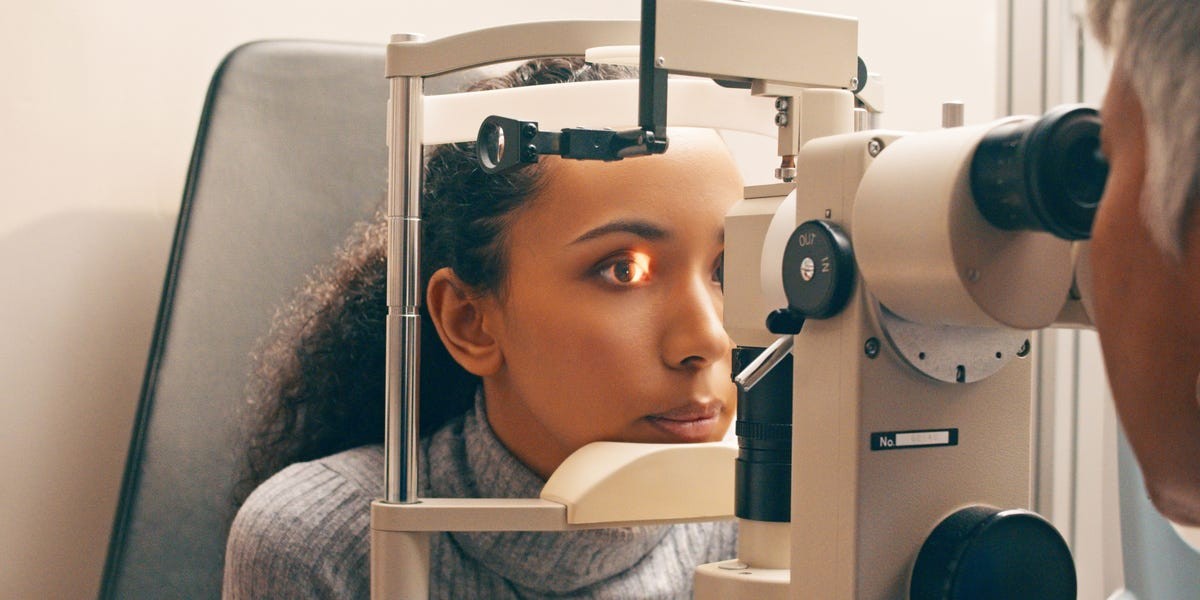
This isn’t a “read the letters on the wall” screen. This is the real deal. Comprehensive.
Optometrists see more than just refraction. They look at structures. Retina. Nerves. Blood vessels.
Think about that. The eye is the only place in your body where you can look directly at blood vessels. And nerve tissue. Without a needle. Without an MRI machine. Without a bill that breaks your bank account.
“We can identify… whether someone is at higher risk… just by looking into the eye.”
Dr. Bowen points out the truth. Early stages of disease? Silent. You feel nothing. Your vision looks okay.
Until it isn’t.
Spotting diabetic retinopathy early? That buys you time. Slows the decay. Saves the sight.
The American Optometric Association wants everyone to get in annually. In-person. Not telehealth for this. You need the drops. You need the instruments.
If you have diabetes. Or if you are popping those GLP-1 pills and pens. See your doc. More often maybe. Let them tell you.
Do people panic?
“Potential vision issues are not a reason… to consider not taking them.”
These drugs are transformative. They change lives. They are worth the trouble.
Just don’t ignore the mirror. And the microscope.
Stay on track with the exams. Because your brain extends into your optic nerve. And if you ignore one part…
You might lose the picture.