
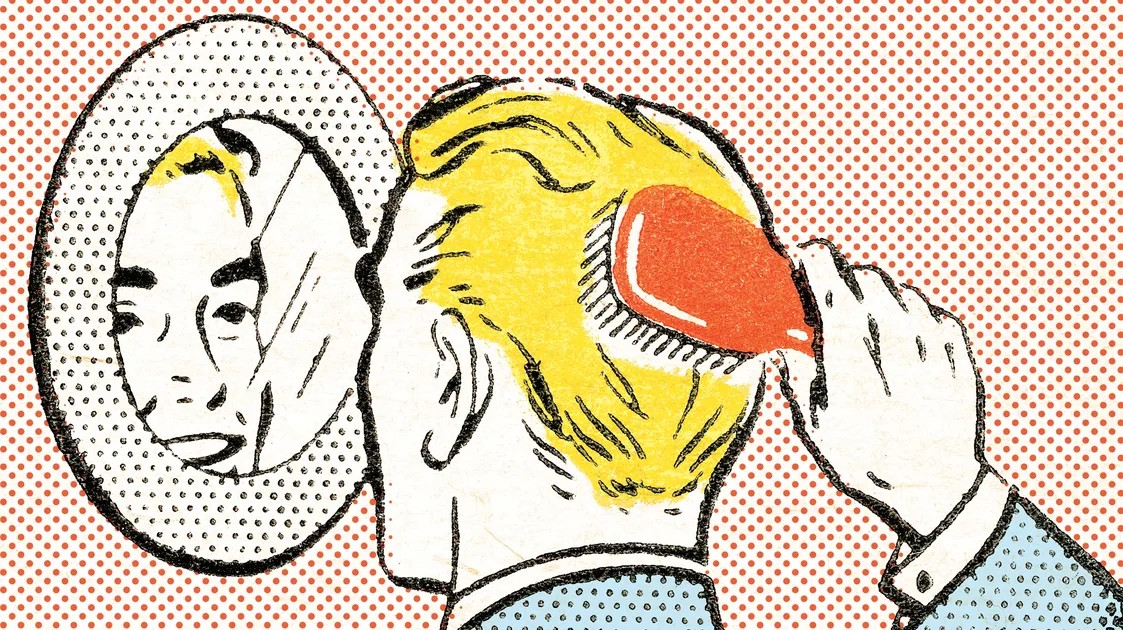
The intersection of grooming and politics has never been subtle, but recent trends highlight a growing divide in men’s hairstyles that mirrors broader cultural polarization. While one political demographic has embraced the polished, pageant-ready aesthetic of honey-blonde highlights, the other has co-opted a specific, sharp-cut style that barbers and cultural commentators now describe as “MAGA-coded.”
This isn’t merely a matter of personal taste. As public figures from comedians to former government officials adopt this look, it raises questions about how aesthetic choices signal political identity—and how quickly a mainstream trend can be hijacked by political movements.
Зміст
The Anatomy of the “Alt-Right” Cut
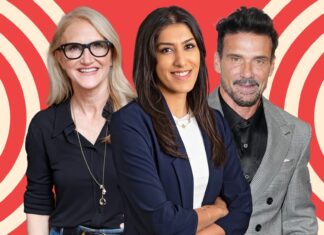
The style in question is a disconnected undercut paired with a textured crop. It features high, skin-tight fades on the sides and back, contrasting with longer, slicked-back hair on top. This look has become a visual shorthand for a segment of the Republican base, worn by figures such as Andrew Schulz, the comedian who hosted President Donald Trump, and Greg Bovino, the former Border Patrol agent recently removed from his post.
Barber Jesse Morton, co-owner of Cloak & Dagger Barber Co. in Portland, Oregon, notes that this style has been associated with right-wing movements for nearly a decade.
“The side-fade picked up the ‘the fashy haircut’ nickname online around 2016, after white nationalist Richard Spencer made it part of the unofficial uniform of the alt-right,” Morton explained.
The association stems from historical precedents. During World War II, the Hitler Youth and German soldiers favored similar close crops for practical reasons—they allowed helmets to fit easily and required minimal maintenance. However, Morton emphasizes that the cut itself was not originally political. Before its adoption by far-right groups, it was a mainstream staple worn by Brooklyn hipsters, David Beckham, and Macklemore.
Pop Culture Origins vs. Political Appropriation
The haircut’s popularity surged between 2018 and 2020, driven largely by television dramas rather than politics. Shows like Peaky Blinders and Boardwalk Empire popularized the “mobster” aesthetic, leading millions of men to request the “Cillian Murphy cut” from their barbers.
“The cut on its own… is just ‘Peaky Blinders,'” Morton said. It represents a vintage, 1920s-inspired crime family look that transcended political lines.
However, as the style permeated mainstream culture, it was simultaneously adopted by figures associated with the MAGA movement. Today, the distinction often lies in the details. According to Morton, adding a handlebar mustache to the undercut pushes the look firmly into “Trump voter territory.” Other variations include what Morton calls the “Don Jr. gel-helmet slick-back” or the “Josh Hawley side-part bro-flow.”
Calvin Cao, founder of Kindred Barber in Washington, D.C., suggests that this specific aesthetic is more common among urban, media-savvy conservatives—what he terms “city-based podcast bro MAGA”—rather than the broader rural base, who may lack access to barbers skilled in texturizing complex fades.
The Trend Is Fading
Despite its political associations, the undercut is losing its cultural dominance. Barbers report that the style is evolving toward softer, more natural looks.
Jonny Haviv, founder of Hairchitect Barbershop & Lounge in San Francisco, notes a shift away from extreme contrast. “We’re seeing softer fades, more natural movement, and less extreme contrast. The trend is becoming more relaxed and less ‘over-engineered.'”
This shift may explain why Andrew Schulz recently abandoned the style. As the haircut fades from mainstream fashion, its political signaling power may also diminish, leaving it as a niche choice rather than a defining trend.
The Liberal Counterpart
If there is a “MAGA cut,” there is also a recognizable aesthetic for liberal men. Morton describes the current liberal style as “lived-in, longer, and soft-textured.” It avoids harsh lines and fades, aiming for a look that appears effortless—as if the wearer used product but wants you to think they didn’t.
This aesthetic is embodied by California Governor Gavin Newsom, whose gelled-back, silver-fox coif has drawn attention ahead of the 2028 Democratic presidential nomination race. Darius Davie, owner of Groom Guy in D.C., describes Newsom’s look as “structurally perfect” to the point of suspicion.
“It’s wind-tunnel tested. Like he keeps a comb in the glove box and a stylist on retainer. Politically, it reads, ‘I will tell you exactly what you want to hear, and my hair will agree,'” Davie joked.
Conclusion
While a haircut alone cannot determine a person’s political affiliation, the divergence in men’s grooming trends reflects deeper cultural divides. The “MAGA cut” illustrates how mainstream fashion can be co-opted by political movements, while the “liberal cut” emphasizes a curated naturalism. As these styles evolve, they remain subtle but potent signals of identity in an increasingly polarized landscape.