


A groundbreaking study has identified a key protein that allows bones to respond to physical activity, even without actual movement. Researchers at the University of Hong Kong (HKUMed) have discovered that a protein called Piezo1 acts as an “exercise sensor” in bone marrow, triggering bone growth when activated. This finding opens the door to potential treatments that mimic the benefits of exercise for individuals unable to engage in physical activity, such as the elderly, bedridden patients, or those with chronic illnesses.
Зміст
The Problem: Age-Related Bone Loss
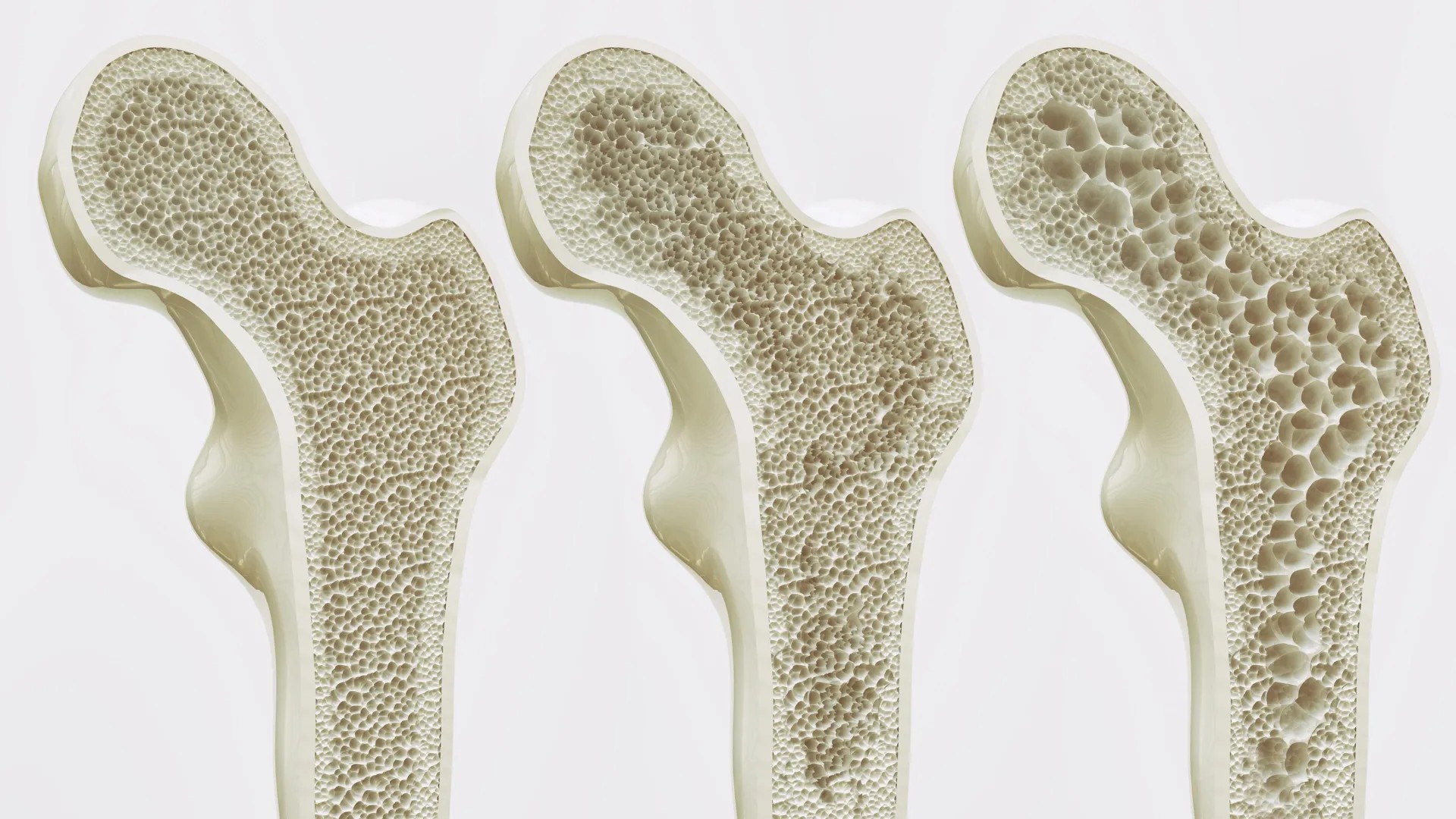
Osteoporosis and age-related bone loss are major global health concerns. Roughly one-third of women and one-fifth of men over 50 will suffer a fracture due to weakened bones. The condition impacts millions worldwide, leading to chronic pain, reduced mobility, and strain on healthcare systems. In Hong Kong, nearly half of women and 13% of men over 65 are affected.
As people age, bone density declines as bone marrow stem cells shift from building bone tissue to accumulating fat. This fat crowds out healthy bone, accelerating deterioration. Current treatments often rely on physical activity, which isn’t always an option for vulnerable patients.
How Piezo1 Works as the Body’s Exercise Sensor
The study, published in Signal Transduction and Targeted Therapy, identified Piezo1, a protein on the surface of bone marrow stem cells, as the crucial link between physical force and bone health. When activated by movement, Piezo1 reduces fat buildup and promotes bone formation.
Experiments with mice and human cells demonstrated that without Piezo1, stem cells are more likely to become fat, and inflammatory signals (Ccl2 and lipocalin-2) further hinder bone growth. Blocking these signals partially reversed the damage.
Mimicking Exercise Through Drugs
“We’ve essentially decoded how movement translates into stronger bones at a molecular level,” said Professor Xu Aimin, the study’s lead researcher. Activating the Piezo1 pathway could chemically trick the body into thinking it is exercising, even in the absence of movement.
This breakthrough suggests the development of “exercise mimetics” – drugs that stimulate Piezo1 to maintain bone mass in those unable to exercise. Dr. Wang Baile, a co-leader of the study, emphasized the potential benefit for frail, injured, or chronically ill patients.
Future Applications and Collaboration
The research team is now working to translate these findings into clinical therapies. Collaborators from the French National Centre for Scientific Research (CNRS) and other institutions highlight the possibility of broader applications beyond physical therapy.
The study was supported by multiple funding sources, including the Research Grants Council, Health and Medical Research Fund of Hong Kong, and national programs in China and France.
This discovery represents a significant step toward preventing osteoporosis-related fractures and improving quality of life for vulnerable populations by providing a potential alternative to traditional exercise-based treatments.