


For many grocery shoppers, bananas are a source of constant frustration. One day they are perfect; the next, they are an overripe, mushy mess relegated to smoothies or banana bread.
To find a way to extend their peak freshness, we conducted an independent six-day test comparing seven different storage methods. Our goal was not to speed up ripening, but to find the method that preserves the ideal balance of sweetness, texture, and appearance for eating out of hand.
Зміст
The Methodology
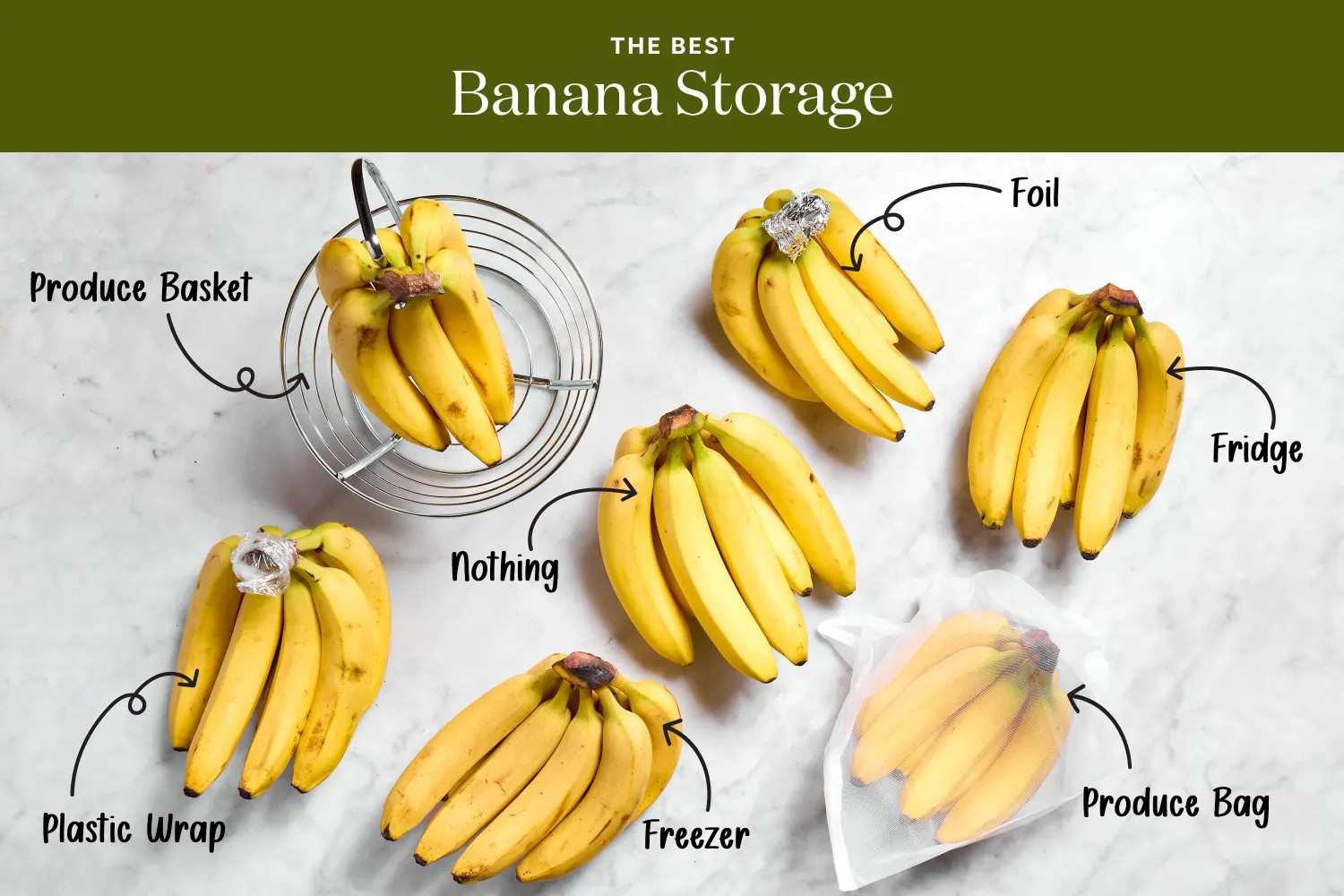
We used conventional, unblemished bananas at the same stage of ripeness (bright yellow with slight green at the ends). We tested them across seven environments: the freezer, the fridge, the counter, a hanging hook, plastic wrap on the stems, a sealed plastic bag, and foil on the stems.
Each method was rated on a scale of 1 to 10 based on skin appearance, flavor, and texture.
The Results: From Mushy to Perfect
❌ The Cold Storage Methods (Low Scores)
If you are storing unripe, starchy bananas, avoid the cold.
– The Freezer (4/10): Freezing unpeeled bananas made them impossible to peel, and even after thawing, the fruit was mushy and tasted starchy. Note: Freezing is excellent for bananas that are already ripe, but it halts the ripening process entirely.
– The Fridge (5/10): Storing bananas in a crisper drawer resulted in dark skins but a “green,” reedy flavor and a firm, starchy texture.
⚠️ The Room Temperature Methods (Average Scores)
These methods follow natural ripening patterns but offer little protection against spoilage.
– On the Counter (6/10): After six days, these were very sweet but heavily spotted and far too mushy for snacking.
– On a Hook (8/10): Suspending the fruit helps prevent bruising, resulting in better texture than the counter, though they still developed significant brown freckling.
✅ The Gas-Control Methods (High Scores)
The most successful methods focused on managing ethylene gas —the natural hormone released by bananas that triggers ripening. By limiting the gas’s reach, we could slow the aging process.
- Plastic Wrap on Stems (8/10): Wrapping the stems tightly helps contain ethylene, resulting in a decent lifespan and moderate sweetness.
- The Plastic Bag (8.5/10): Surprisingly, storing a bunch in a sealed, reusable bag produced incredibly sweet, “candy-like” flavor. However, the texture was exceptionally creamy/soft, which may not suit everyone.
- Foil on Stems (9.5/10) — THE WINNER: By tightly wrapping the stems in heavy-duty foil, we achieved the best results. These bananas remained mostly unblemished, possessed a deep sweetness, and maintained a firm, pleasant bite.
Summary of Findings
| Method | Rating | Best For… |
|---|---|---|
| Foil on Stems | 9.5/10 | The perfect snack: sweet and firm. |
| Plastic Bag | 8.5/10 | Those who love an intensely creamy texture. |
| Hanging Hook | 8/10 | Preventing bruises while ripening naturally. |
| Freezer/Fridge | 4-5/10 | Only use these once the fruit is already ripe. |
💡 Pro-Tip
If you want to slow down the ripening process, focus on the stems. The stems are the primary source of ethylene gas; wrapping them in foil acts as a barrier that keeps your bananas yellow and firm for much longer.
Conclusion: For the ultimate balance of sweetness and texture, wrap your banana stems tightly in heavy-duty foil to significantly extend their peak eating window.