


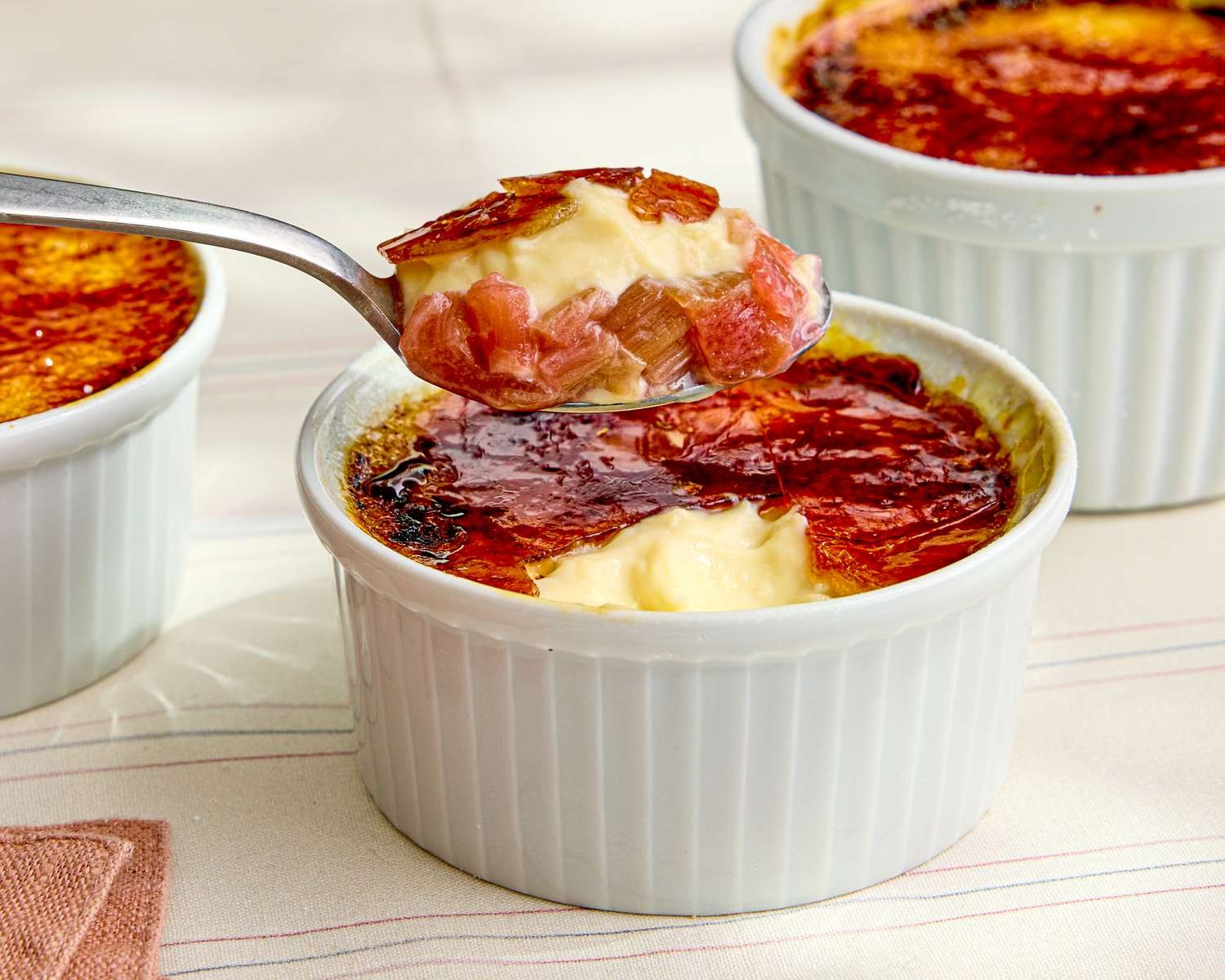
While a classic crème brûlée is a masterpiece of simplicity, the creamy custard serves as an ideal culinary canvas. By leaning into seasonal produce, a cook can transform this French staple from a predictable dessert into a vibrant expression of the time of year—much like using pumpkin in autumn or sweet corn in the height of summer.
For spring, nothing offers a more striking profile than the pairing of roasted strawberries and rhubarb. This combination introduces a tart, jammy brightness that cuts through the inherent richness of the custard, creating a sophisticated play of flavors and textures.
The Art of the Layered Dessert
The concept of layering fruit beneath custard is a recognized technique in professional cooking, popularized by figures like Nigel Slater. However, executing this at home requires precision to avoid a common pitfall: structural bleeding.
Because strawberries and rhubarb release significant moisture when heated, there is a risk that the fruit will turn into a watery liquid that dissolves into the custard. This results in a “muddy” dessert with a compromised texture. To achieve a professional, clean separation, follow these essential techniques:
1. Creating a Concentrated Compote
Instead of stovetop preparation, roast the diced fruit (approximately half an inch) directly in the ramekins with sugar. This “hands-off” method allows the juices to reduce and thicken into a syrupy, jammy consistency within the dish itself.
* Crucial Tip: Do not remove the ramekins from the oven until the juices have thickened. If the compote remains watery, it will prevent the custard from setting properly.
2. Temperature Management
Once the fruit is roasted, it must cool to a lukewarm temperature before the custard is added.
* Why it matters: Pouring custard into piping-hot ramekins can scramble the egg yolks, ruining the texture. Furthermore, a slightly cooled compote firms up, ensuring it stays at the bottom of the dish rather than swirling into the cream.
Crafting a Stable, Silky Custard
A successful layered dessert requires a custard that is not only velvety but also structurally sound. To ensure the custard sits neatly atop the fruit without becoming “weepy” or loose, this version utilizes a higher ratio of cream to milk. This extra fat provides the stability needed to offset any residual moisture from the fruit layer.
The Tempering Process:
To achieve a smooth consistency, bring the cream and milk to a simmer, then slowly whisk them into the egg yolk and sugar mixture. This process, known as tempering, gently raises the temperature of the eggs to prevent them from curdling.
Precision Baking:
The custard should be baked until just set. For the most consistent results, use an instant-read thermometer to ensure the custard reaches 170°F (77°C). Note: Measure the temperature of the custard itself, not the fruit layer beneath.
Pro-Tips for a Professional Finish
Achieving Clean Layers
To prevent the custard from disturbing the fruit layer as you pour it, use the back of a spoon. Hold the spoon just above the ramekin and pour the custard over it; the spoon diffuses the liquid, allowing it to settle gently and maintain a sharp, defined line between the cream and the fruit.
The “No-Torch” Alternative
The hallmark of a crème brûlée is the crackly, caramelized sugar crust. While a blowtorch is the gold standard for achieving this, it is not strictly necessary for this specific recipe. Because the primary textural contrast comes from the jammy fruit, the dessert remains exceptional even without the sugar shell.
If you wish to add crunch without a blowtorch, consider these alternatives:
– A sprinkle of toasted nuts
– Crushed cookies
– Simply serving it as a chilled, layered custard
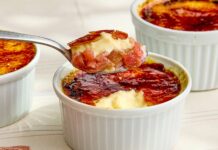
The true magic of this dessert lies in the “reveal”—the moment a spoon breaks through the silky custard to uncover the bright, rosy fruit hidden beneath.
Conclusion
By mastering the balance of moisture and temperature, you can transform a standard custard into a sophisticated, seasonal dessert. The key to success lies in concentrating the fruit into a jammy base and using a rich, tempered custard to create distinct, beautiful layers.