




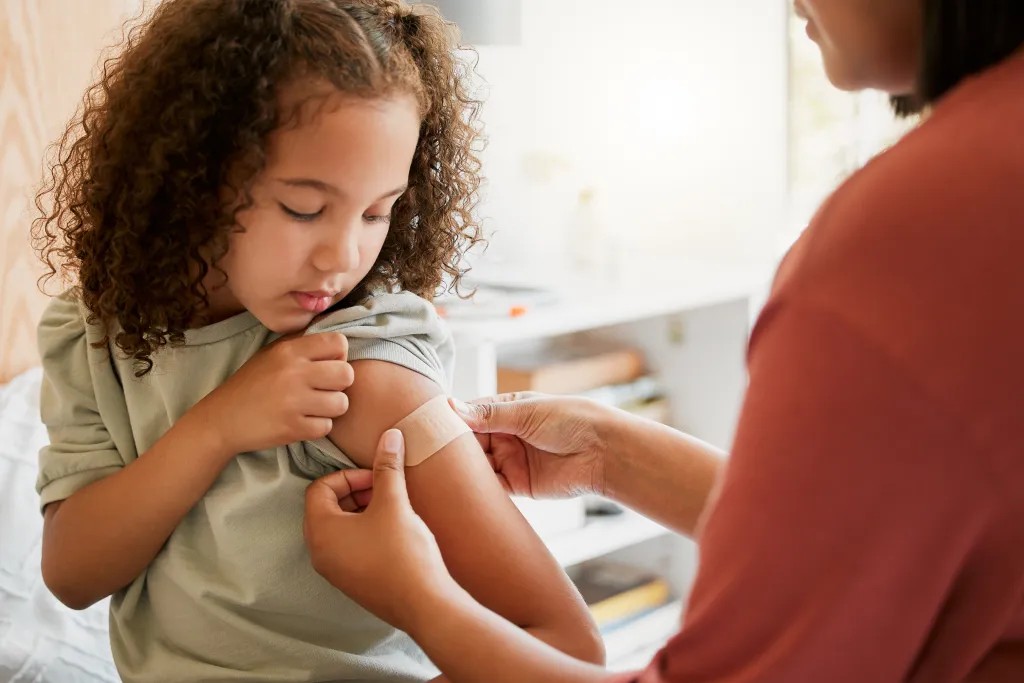
A recent legal decision has brought a temporary halt to a significant shift in federal health policy. On March 16, a U.S. district judge struck down new vaccine guidelines issued by the CDC, which had drastically reduced the number of recommended immunizations for children.
This ruling is a pivotal moment in the ongoing legal battle AAP et. al. v Kennedy et. al., a lawsuit brought by a coalition of medical organizations—led by the American Academy of Pediatrics (AAP) —against Health Secretary Robert F. Kennedy Jr. and his administration.
Зміст
The Core of the Conflict: Science vs. Policy
The dispute centers on a move made by the CDC in January, which quietly reduced its list of universally recommended childhood vaccines from 17 down to 11.
The medical community’s primary argument is that these changes were made without new scientific evidence to support them. The lawsuit alleges that the decision was arbitrary and lacked a factual basis. This highlights a growing tension in public health: the struggle between administrative policy shifts and the established consensus of medical experts.
Why this matters: When federal guidelines change without a corresponding shift in scientific data, it creates a “guideline gap.” For months, parents have been faced with two conflicting sets of advice:
– The CDC’s reduced list (currently under judicial block).
– The AAP’s full list, which remains unchanged for 2026.
Navigating the Confusion: What Parents Need to Know
For families trying to navigate pediatric healthcare, the conflicting information from federal and professional medical bodies can be overwhelming. However, medical experts emphasize that while the recommendations changed at the federal level, the science has not.
Key Takeaways for Families:
- The Ruling’s Impact: The court’s decision validates the stance of pediatricians who argue that health policy must be driven by data rather than political or administrative shifts.
- Current Recommendations: Despite the legal battle, the AAP continues to recommend vaccines for rotavirus, hepatitis A, hepatitis B, COVID-19, influenza, and meningococcal disease.
- Public Health Risks: Pediatricians warn that reducing vaccination rates can lead to the resurgence of preventable diseases like measles, mumps, and chickenpox, increasing risks for both individual children and the broader community.
Finding Reliable Information
In an era of social media misinformation, medical professionals urge parents to look past “internet rumors” and focus on evidence-based resources.
“The judicial block is a reminder that when it comes to health, we follow the science, not vibes,” says Elizabeth Murray, DO, MBA, a pediatric emergency medicine specialist.
Recommended Resources:
1. HealthyChildren.org: The official website of the American Academy of Pediatrics.
2. The Children’s Hospital of Philadelphia (CHOP): Specifically their Vaccine Education Center.
3. Your Pediatrician: The most critical resource for personalized medical advice and addressing specific concerns.
Conclusion
The court’s decision to strike down the reduced vaccine guidelines serves as a check on administrative power, ensuring that federal health recommendations remain rooted in scientific consensus. For parents, the most reliable path forward is to rely on established medical organizations and their own healthcare providers rather than conflicting federal directives.