




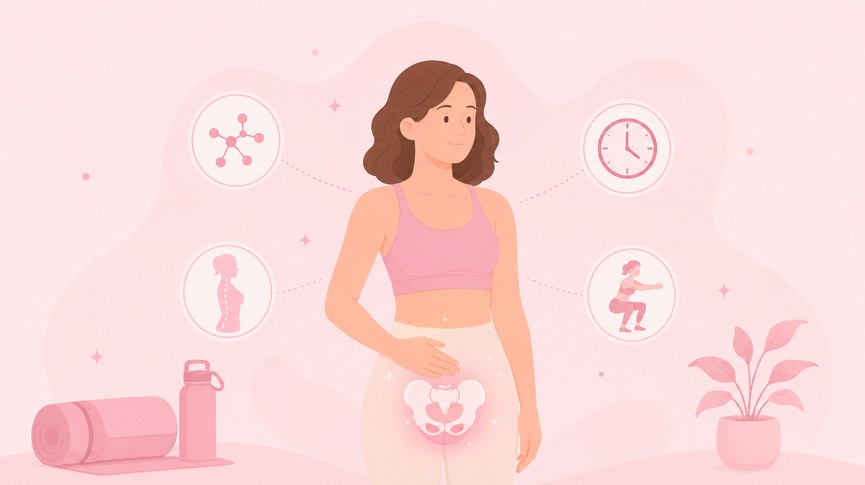
Your pelvic floor is a hammock. Or a net. It holds your bladder, bowels, and uterus in place. It contracts. It relaxes. And yes. It ages.
Even if you never carried a baby. The mid-forties bring shifts. Perimenopause hits. Estrogen drops. Muscles get thin. Elasticity fades.
Most women ignore this. Until the sneeze happens.
Зміст
The estrogen tax
Estrogen keeps muscles toned. When production slows—usually between the late 30s and early 40s—every muscle in the body loses strength. The pelvic floor isn’t special. It’s just another victim of the drop.
The signs aren’t subtle. Vaginal dryness. Heavier periods. Sleep disruption. Or the dreaded feeling that your organs are drifting lower than they should be.
This isn’t just biology. Lifestyle matters too. Metabolism slows down. Weight goes on. Pressure builds up on the floor beneath you. Pregnancy matters, sure. But it isn’t the only factor. Sitting on a couch while gravity does its work? That counts.
Modern medicine can fix some of this. Don’t wait until it interferes with your life. Talk to your doctor.
Dysfunction vs. Prolapse
Pelvic floor dysfunction is messy. The muscles are too weak. Too tight. Or they just refuse to coordinate.
It feels like pressure. A heavy lump in the pelvic region. Leakage. Pain during sex. Frustration is a constant companion.
Pelvic organ prolapse is worse. The “net” tears or sags. Organs bulge into the vaginal canal. Common in moms. Common in chronic constipators who push too hard.
Symptoms here include:
– Lower back pain
– A visible bulge or pressure
– Difficulty emptying the bladder
Is this inevitable?
The “sneeze-leeing” problem
Women trade these stories like currency. I sneezed and peed.
Bladder control issues are massive for women over 40. Specifically, stress incontinence. A sudden burst of pressure. A laugh. A cough. The door swings open.
Studies say 30 to 50 percent of women over 40 leak. Thirty. Fifty. That’s a lot of people walking around with anxiety.
It’s not cute. It’s exhausting. But it’s fixable.
You don’t have to live with it. Fiber helps. Stop constipating yourself. Drink water. Pee on schedule. Hormone replacement therapy? Maybe. Check with your gynecologist.
But mostly. It comes down to training.
Kegels actually work
Bad news for the hopeless. Good news for everyone else.
The pelvic floor is a muscle. Like a bicep. Like a quad. You can train it.
Kegel exercises have a strong track record. One 2014 study found up to 75% improvement in women who practiced regularly. Twenty-seven percent is the low end.
But here’s the catch. 20 to 50% of women do it wrong. They bear down. They use the wrong muscles.
Supervised training changes the game. Biofeedback tech shows you if you’re hitting the target. Physical therapists know the map. Give it eight weeks. You should see results.
How to actually train
Want to stop the leak? Practice standing up. That’s when you leak.
For quick reflexes:
1. Contract for 1 second.
2. Release.
3. Repeat 10 times.
4. Build up to 30 rapid contractions a day.
For endurance:
Holding longer supports the bladder over time.
- Contract. Hold for 3–5 seconds. Work up to 10.
- Do 7–10 reps.
- Eventually aim for 15–20.
Three times a week. Consistency beats intensity.
The “Descending Elevators” (Advanced):
Need a challenge? Get a biofeedback device. Or just learn the sensation deeply.
- Lie down. Relaxed.
- Hit 100% effort. Max squeeze.
- Hold at 50% for 3 seconds.
- Rest. Repeat 5 times.
Stage two gets granular. Contract hard. Then drop pressure: 75%. 50%. 25%. Rest. Repeat.
Reverse it too. 25% to 100% then back down.
It feels technical. It is technical.
It’s not the end of the world
Muscles fade. Estrogen falls. This is physics.
But dysfunction isn’t a life sentence. Leaks aren’t mandatory.
A lot of women just accept it. They buy liners and laugh it off. They don’t have to.
Fixable? Usually. Effort? Yes.
If your daily life feels heavy. Or wet. Or painful. Make the call. Your pelvic floor deserves attention. Not just after the break happens. Before it.
The difference between “I’m too old” and “I haven’t trained yet” is perspective.
What do you think about this