



Calories are everywhere. They dictate what we buy at the grocery store, how we plan our meals, and often, how we judge our own choices. You see them on every wrapper, in every app, and on every menu. For decades, the narrative has been simple: count them, cut them, control them. It feels like the universal currency of health. But underneath the obsession lies a basic question that rarely gets answered clearly. What is a calorie, really?
Most people treat the word “calorie” as a synonym for fat or guilt. We associate it with restriction. We think of it as a number that stands between us and our goals. Yet, the science behind it is far less moralistic than our culture suggests. It is not a moral failing to consume energy. It is a biological transaction. Understanding the mechanics can help you stop fighting a number and start working with your body.
Зміст
The Science Behind the Number
A calorie is a unit of energy. Specifically, it is the amount of heat needed to raise the temperature of one kilogram of water by one degree Celsius. That is the textbook definition. In the world of nutrition, we use kilocalories, though we just say “calories.” It is a linguistic shorthand that has stuck.
When you eat food, your body breaks it down. Carbohydrates, fats, and proteins all provide energy. Alcohol does too. The difference lies in how your body processes each. This distinction matters more than the raw number on the label.
Where Calories Come From
Not all calories behave the same way inside you. This is a common point of confusion. Some people ask why eating 100 calories of almonds feels different than 100 calories of soda. The answer is not that the calorie count is wrong. It is that the metabolic pathway changes.
Fiber plays a huge role. Your body cannot fully digest fiber, so some energy from high-fiber foods never makes it into your system. This is why whole foods often have a lower effective caloric impact than processed ones. The processing strips away the structure, making the energy more accessible. This is a key detail for anyone trying to manage weight without feeling deprived.
Why the Calorie Count Isn’t the Whole Story
The focus on counting calories often ignores the quality of those calories. Two foods can have the same caloric value but trigger completely different hormonal responses. Insulin, leptin, and ghrelin all react differently based on what you eat. This affects hunger, energy levels, and storage.
If you only look at the number, you miss the context. A calorie from a nutrient-dense source fuels cells. A calorie from a highly processed source might spike blood sugar and leave you hungry an hour later. This is why many nutritionists argue that the source matters more than the sum.
“Energy balance is real, but the quality of energy affects how your body uses it.”
This perspective shifts the goal from mere subtraction to strategic addition. You are not just removing energy. You are choosing how that energy interacts with your biology. This approach is more sustainable than rigid counting. It allows for flexibility. It reduces the anxiety that comes with tracking every bite.
Practical Steps to Use This Knowledge
You do not need to become a biochemist to apply this. Start by looking at the whole picture. Check the
What a Calorie Actually Is
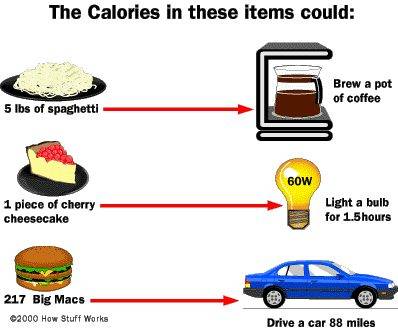
Let’s clear up a common confusion before we dive in. A calorie is a unit of energy. Not just food energy. Any energy.
Take gasoline. A single gallon holds roughly 31 million calories. Specifically, it’s the heat needed to raise one gram of water by one degree Celsius. In physics terms, that’s 4.184 joules.
But here is where it gets messy. When you see “200 calories” on a soda can, you aren’t looking at 200 actual calories. You’re looking at 200 kilocalories. That’s 200,000 small calories. Food labels drop the “kilo” prefix for simplicity. Same goes for exercise. If you burn 100 calories jogging a mile, you’ve burned 100 kilocalories. For the sake of this discussion, when we say calorie, we mean kilocalorie.
How Your Body Turns Food Into Fuel
We need energy to stay alive. To breathe. To pump blood. We get this from food.
The calorie count on a package is just a measure of potential energy. Carbs have 4 calories per gram. Protein has 4. Fat has 9. Foods are a mix of these three.
Look at a packet of maple-and-brown-sugar oatmeal. The label says 160 calories. If you could set it on fire and let it burn completely (which is harder than it sounds), it would release 160 kilocalories. Enough energy to heat 160 kilograms of water by one degree.
Break down the macros on that same packet:
– 2 grams of fat (18 calories)
– 4 grams of protein (16 calories)
– 32 grams of carbohydrates (128 calories)
Total: 162 calories. The manufacturer rounded down to 160. Classic.
Your body doesn’t burn food like a fire. It metabolizes it. Enzymes break carbs into glucose. Fats into glycerol and fatty acids. Proteins into amino acids. These travel through your blood to your cells. They are either used immediately or stored. Eventually, they react with oxygen to release energy.
Calculating Your Personal Calorie Needs
How many calories do you actually need?
Nutrition labels use a 2,000-calorie baseline. That’s an average. It’s not universal. Your needs depend on height, weight, gender, age, and activity level.
Three factors drive your daily calorie burn:
1. Basal Metabolic Rate (BMR)
2. Physical Activity
3. Thermic Effect of Food
BMR is the energy your body burns at rest. It covers heartbeats, breathing, kidney function, and temperature control. It accounts for 60 to 70 percent of your total daily burn. Men generally have a higher BMR than women.
To estimate your BMR, the Harris-Benedict formula is one of the most accurate methods available.
For Adult Males:
66 + (6.3 x weight in lbs) + (12.9 x height in inches) – (6.8 x age)
For Adult Females:
655 + (4.3 x weight in lbs) + (4.7 x height in inches) – (4.7 x age)
Notice the difference in the starting numbers. The female equation starts at 655. It’s a specific constant. It looks odd, but it’s mathematically correct.
Why does this matter? Because guessing your needs leads to guessing your diet. Knowing your BMR gives you a baseline. From there, you add movement. You account for digestion. You get a real number. Not an average. Yours.
The math is cold. It doesn’t care about your cravings. It doesn’t care about your stress levels. It just calculates the energy required to keep the machine running. You still have to make the choices. But at least now you’re working with data. Not a guess.
Beyond the Scale: How Body Weight Changes Fuel Usage
Your daily energy budget isn’t static. It’s a sum of three moving parts. First, there’s your Basal Metabolic Rate (BMR)—the baseline cost of keeping your heart beating and lungs breathing. Then comes physical activity. This is the big swing. Everything from shoveling snow to walking the dog burns energy, but the number depends heavily on your body weight. Heavier bodies require more fuel to move. There are charts online that break this down by activity and weight, so you can see exactly what a hour of jogging costs you versus an hour of gardening.
Finally, there’s the thermic effect of food. This is the energy your body spends just to digest what you eat. It sounds negligible, but it adds up. Roughly 10 percent of the calories you consume are used in the breakdown process. To figure this out, multiply your total daily intake by 0.10. If you’re tracking what you eat, tools like the USDA National Nutrient Database or simple calorie counting apps can help you get those numbers right.
The Math of Fat Storage and Loss
So, what happens when the input doesn’t match the output?
If you eat more than you burn, the surplus becomes fat. Your body is essentially a storage unit, saving energy for a rainy day. Specifically, an accumulation of 3,500 extra calories equals one pound of fat. Conversely, if you burn 3,500 calories more than you consume—through a mix of eating less and moving more—your body taps into that stored reserve. It converts one pound of fat back into energy to cover the deficit.
Exercise does more than just burn calories while you’re doing it. It creates a ripple effect. Your metabolic rate stays elevated for about two hours after you stop moving. That’s extra energy spent just to return to normal. This “afterburn” is a small but real advantage.
Is a Calorie Just a Calorie?
This is where it gets tricky. If we only care about weight loss, the source of the calorie technically doesn’t matter. A calorie from protein is the same unit of energy as a calorie from fat. Burn more than you eat, and the scale goes down. Maintain the balance, and you stay put.
But weight is only one metric. Nutrition matters.
Carbohydrates and proteins are generally healthier sources of fuel than fats. Your body needs a certain amount of fat to function—it helps absorb vitamins A, D, E, and K—but too much can lead to serious health consequences. The FDA suggests that fat should make up no more than 30 percent of your daily calories. For a 2,000-calorie diet, that’s 600 calories, or about 67 grams of fat. Many nutritionists now argue for an even lower limit: 25 percent. That’s 500 calories, or 56 grams.
The density of calories in certain foods is often invisible until you look at the numbers. Consider these serving sizes:
- Canola oil: One cup contains 1,674 calories and 218 grams of fat.
- Peanut butter: One cup packs 1,520 calories and 129 grams of fat.
- Cheddar cheese: One cup has 531 calories and 44 grams of fat.
- Chocolate syrup: One cup delivers 837 calories with only 3 grams of fat.
- Sugar: One cup is 774 calories with zero fat.
- Coca-Cola: One can is 140 calories with zero fat.
Oils and nut butters are incredibly calorie-dense. It’s easy to overconsume them because they don’t trigger the same fullness signals as larger volumes of food. Sugar and soda, while high in calories, lack the fat content of oils, yet they still contribute significantly to your daily total without providing satiety.
Where do you draw the line? It’s not just about the math. It’s about what keeps you feeling steady through the afternoon slump. It’s about choosing foods that fuel you rather than just filling you.