




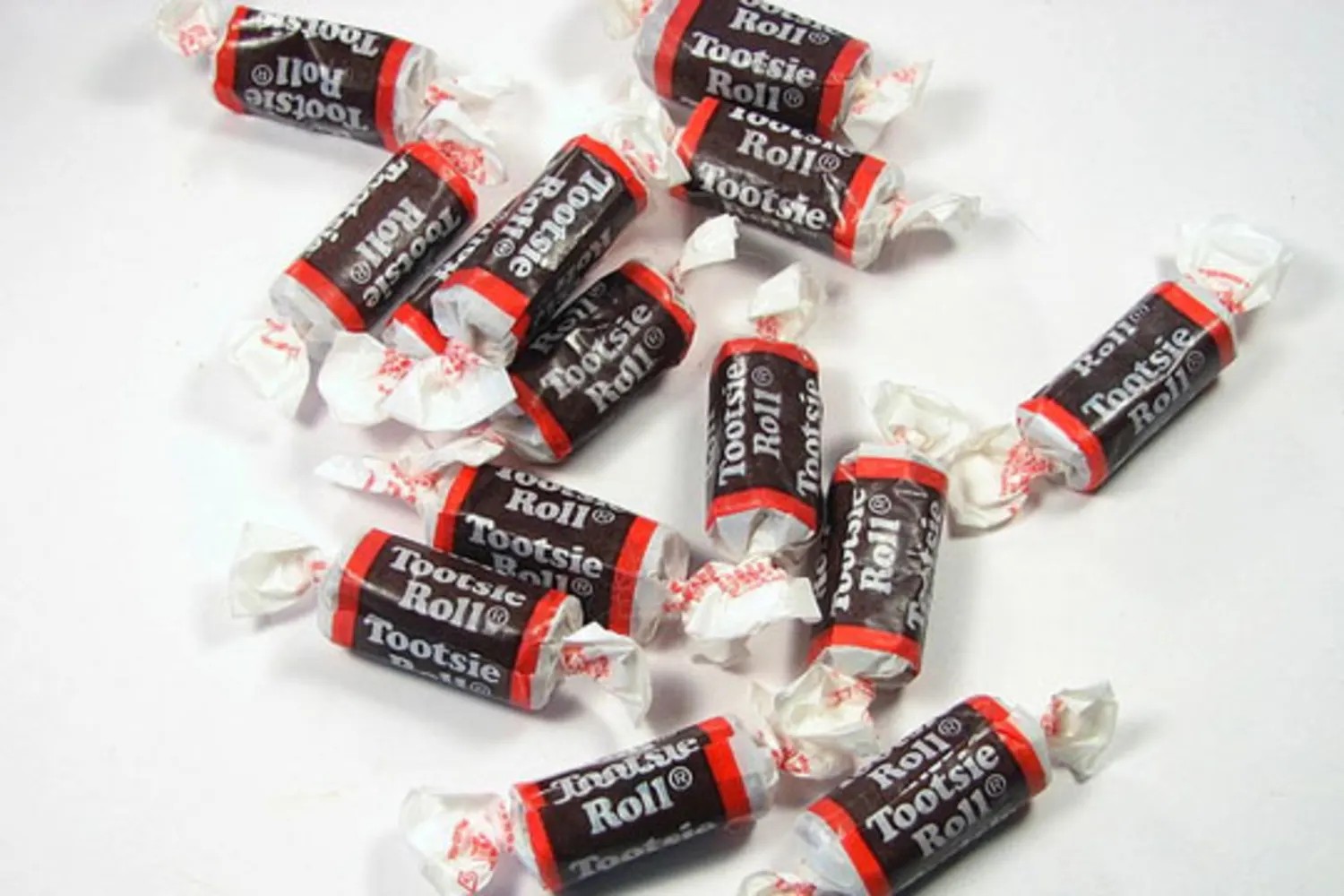
While most people remember the classic 1970s commercial where Mr. Owl claimed it takes only three licks to reach the center of a Tootsie Pop, science has since proven him wrong. Research from Purdue University suggests the actual number is closer to 364. However, a much more intriguing question remains: Is it possible that the candy you are eating today contains ingredients from the very first batch made in 1896?
The “Graining Process” Explained
The answer lies in a unique manufacturing technique that has remained unchanged for over a century. Tootsie Rolls are produced by melting a precise blend of sugar, corn syrup, condensed skim milk, and cocoa. But the “secret” to their consistency involves more than just the raw ingredients.
According to archived information from the company, the creator of the recipe, Austrian immigrant Leo Hirshfield, utilized a method known as “graining.” This process involves incorporating a significant portion of the previous day’s batch into the new production cycle.
Because this cycle repeats every single day, a mathematical phenomenon occurs:
– A portion of yesterday’s candy is added to today’s ingredients.
– Today’s candy will be added to tomorrow’s batch.
– This creates a continuous, unbroken chain of production.
The brand has even leaned into this theory, stating that there is “theoretically” a trace of Leo’s original 1896 recipe in every one of the 64 million Tootsie Rolls produced daily.
A Culinary Comparison: The Sourdough Parallel
This method of continuous replenishment is not unique to the candy industry; it mirrors the traditional practice of maintaining a sourdough starter. In baking, a portion of an old starter is kept and “fed” with fresh flour and water to keep the culture alive.
However, science offers a cautionary note regarding the “age” of these ingredients. Much like how sourdough bacteria evolves rapidly, researchers have found that:
1. The microbial makeup of a starter changes significantly within just 14 days.
2. The current environment and “food” (fresh ingredients) have a much greater impact on the final product than the age of the original starter.
While the process is 130 years old, the physical atoms of the ingredients are constantly being refreshed.
How It’s Made Today
A 2023 behind-the-scenes look by the Food Network provided a glimpse into the modern scale of this tradition. The manufacturing process remains a heavy-duty, mechanical operation:
– Ingredients are melted into a massive, uniform mixture.
– The liquid candy is poured onto sheets to cool.
– The cooled material is funneed through extruders to create the iconic shape.
While the scale has moved from a small immigrant’s kitchen to a massive industrial operation, the fundamental logic of the “graining process” appears to be the backbone of their production.
Whether you are consuming actual molecules from the 19th century or simply a product of a 130-year-old continuous cycle, the legacy of the original recipe remains intact.
Conclusion
The Tootsie Roll is a rare example of a modern food product that maintains a direct, unbroken link to its Victorian-era origins through a continuous manufacturing loop. While you may not be eating “old” sugar, you are participating in a culinary tradition that has survived for over a century.