


Ah, nature. It’s fresh. It’s clean. It smells like pine and regret.
You pack your bags, eager to disconnect, but then the logistics hit. Where do you store the dairy? How much ice can you realistically carry up that trail? And more importantly, how do you eat something other than stale crackers and sadness?
Jon Kung knows the drill. He’s a chef. He wrote Kung Food. He treats outdoor dining not as a last resort but as an actual culinary event. We asked him what goes into his kit when he leaves civilization behind. Specifically: what does not need refrigeration, and what should never leave his campsite.
Eat This First
Kung is obsessed with fire. Not just for ambiance. For the flavor.
“It gets this smoky goodness that you can’t replicate on a gas grill.” He’s talking about meats. Steaks, wings, shrimp. The trick isn’t cranking up the flame. It’s patience. Let the wood burn down. Wait for the coals. Grill low and slow.
There’s a Nashville trick he swears by too. Let a little marinade drip onto those coals. Create more smoke. Let it penetrate the protein. It’s subtle but effective.
But meat is perishable. Coolers have limits. Space is precious real estate. You want to reserve that cold storage for things that actually rot. Everything else should survive the heat.
“Fruits and vegetables that can sit in a bag are great. Cooler space is precious. Everything earns its spot.”
So here is what makes the cut.
- Kabocha Squash. Dark green skin, orange inside. It’s nutty. It’s sweet. No fridge needed. Kung chops it up, throws it on the fire, then makes a Japanese pumpkin porridge with oatmeal and maple syrup. Or Chinese five-spice if you want to feel sophisticated while eating hot grain at dawn.
- Tinned Fish. Sardines, yellowfin tuna, the whole shebang. Shelf-stable. Cheap. Put it on noodles or crackers with cheese. It works.
- Instant Noodles. Don’t judge. Camping without them is an existential crisis. Bring multiple types. Buldak. Fly by Jing. You know the rules.
- Potatoes. Versatile idiots of the produce aisle. Breakfast hash? Yes. Side dish? Sure. Grilled with sausage in a skillet? Absolutely.
- Onions and Garlic. The base of every decent dish. Onions also scrub dirty grills if you’re desperate. Which you might be.
- Hard Fruits. Apples. Pears. Oranges. They don’t bruise instantly. Chop an apple into your oats. Cook a pear in syrup. Squeeze orange juice for a sauce. Waste not, want not.
- Carrots. Double duty. Eat them raw with hummus for a snack. Toss them in a stir-fry for dinner. Efficient.
The Gear Nonnegotiables
Food is half the battle. The equipment is the other half.
Kung is blunt about what belongs in your trunk.
A cooler. Two of them, actually. One for drinks. One for the good stuff like eggs and cheese. Buy ice packs. Lots of them. He recommends the YETI brand, probably because he doesn’t want his food warm by noon.
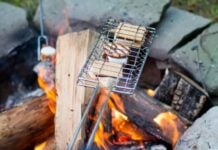
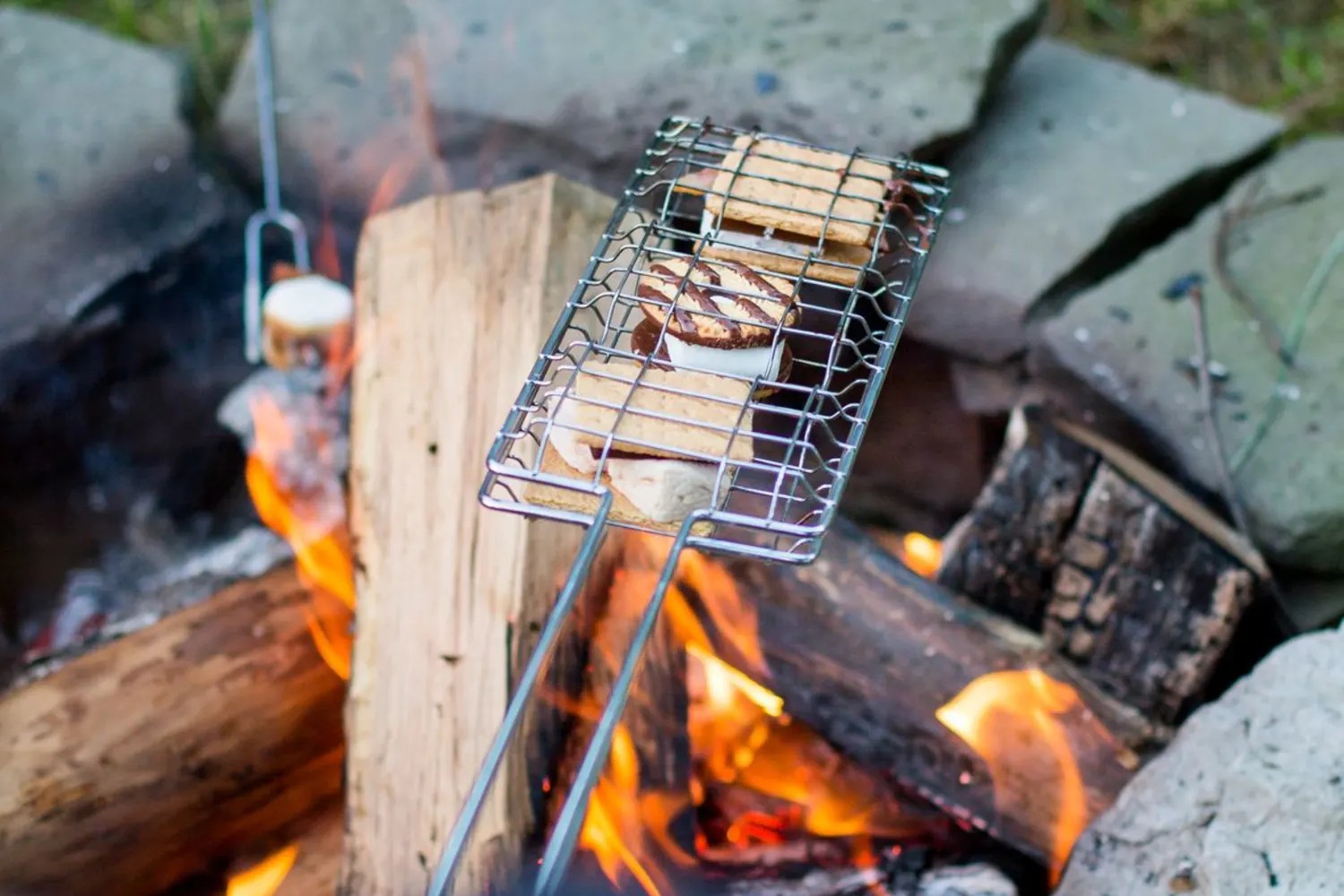
Fire pit grill. SnowPeak or a rusted steel grid he found behind the gas station. It doesn’t matter. The point is that you need a way to boil water and sear things directly over heat. Cooking on fire is the point. If you aren’t cooking on fire, are you even camping?
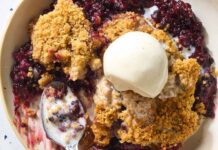
Granulated allulose. Sounds like a pharmaceutical. Works like sugar. Tastes like sugar. Ants ignore it. This is a game changer for the woods. Coffee? Sweet. Skillet fruit compote? Sweet. No swarm of angry insects? Very sweet.
A gas burner. He uses it for emergencies. Rain ruins fire starting. Having a Coleman stove saved his ass more than once. Control is nice when the elements decide to war on you.
A camp battery. If you work remotely from the forest, you need power. If you just want to charge your phone when the speaker dies, get one. Leave it in the car if you’re going full survivalist mode, but have it just in case.
A butane torch. Listen. You are camping. You are not trying to survive the apocalypse. Stop trying to spark a flame with two sticks and damp grass while it gets dark. People are hungry. The light is fading. Just light the thing.
There you go. A cooler full of strategic waste reduction, a fire that actually stays lit, and dinner that doesn’t taste like regret.