



I know what to do. Brush twice a day. Floss before bed. This is the baseline of adulting. But no one tells you this. These good habits can actually eat away at your smile.
We focus on cavities. It’s a scary monster under the bed. But oral hygiene doesn’t just prevent cavities. It keeps them white. Prevents periodontal disease. It may also reduce the risk of cardiovascular disease. A healthy mouth is a healthy body. But even if you’re a religious about flossing, you can still go wrong. Weakness is not your will. It’s in your hands and your gear.
Before you change your technique, let’s take a look at what you are actually scrubbing.
Зміст
The structure of a smile (and how a smile collapses)
The teeth are a layered armor. It has a root attached to the jawbone with cementum and ligaments. Deep inside the tooth is the nerve center, or pulp. It is surrounded by a hard protective layer called dentine. What about the outside? enamel.
That shell is what you whiten. This makes it white. It takes a beating.
Acidic foods. Sugary snacks. starchy carbohydrates. acid reflux. Teeth grinding at night. bite your nails Medicines that cause dry mouth. All of these attack tooth enamel. When it weakens, symptoms appear. Sensitive to cold. as the dentin shows through, the color of the tooth becomes yellowish. Cracks. Chips. Indentation.
What do you do when you feel this sensitivity? Brush harder.
This is a mistake.
Brush away plaque…and enamel too?
No more chew sticks or brushes. OK, but if you’re still using a medium or stiff brush, you’re playing with fire. Or rather, you are sanding away your teeth.
When hard pressure is applied to hard bristles, enamel is lost. The gums can also be damaged. Dentists know this very well. Uses soft bristles. Period. The size of the head is also important. Choose a product that is comfortable to use, reaches the back teeth and does not distort your jaw.
But tools are only half the equation. Technique is where most people fail.
Are you a scrubber? Are you attacking your teeth like you’re removing paint? Stop it.
Proper brushing takes 2 minutes. Break it down. 30 seconds per quadrant. Upper right. Upper left. Bottom right. Lower left.
Hold the brush at a 45 degree angle. This is where plaque hides near the gum line. Plaque is sticky, yes. But it’s not cementum. It does not require industrial strength scrubbing. Even with soft bristles, aggressive motion can damage the surface of the tooth.
Use short, gentle strokes. use vertical up-and-down motions.
Avoid using too much force by holding the brush with your fingertips instead of your palm. It limits your leverage. Force a lighter touch. Watch the bristles. If it bends and hits the teeth, you are using too much force. Ease up.
Can you fix it if it’s gone?
Once the enamel is gone, it’s over. Your body cannot grow new teeth. You cannot create that shell yourself.
However, the bleeding can be stopped. You can support remineralization.
Tooth enamel mainly consists of calcium and phosphate. Remineralization returns these minerals to the surface of the tooth. Strengthens tooth enamel. Sensitivity decreases. It fights decay.
Your saliva helps. This is nature’s repair kit. However, you can boost the process. Look for products that contain calcium phosphate or CPP-ACP (casein phosphopeptide amorphous calcium phosphate nanocomplex). Brands like MI Paste use these ingredients to rebuild strength.
Electric toothbrushes and manual toothbrushes
Does the type of brush matter?
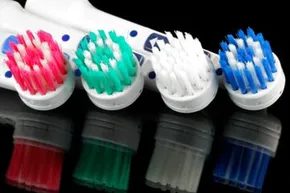
In the long term, electric toothbrushes can remove plaque and reduce staining. It does the work for you. It vibrates away the gunk.
A manual brush also works. With discipline and the right technique, a manual brush can work just as well.
The brush itself does not affect oral health. Your frequency does. Your technique does.
If you use an electric brush, keep the pressure light. Move slowly. Don’t let the machine do all the work and ignore the angles.
Conclusion
Choose a brush with soft bristles. Ease off the pressure. Be consistent.
Sounds simple. It’s boring. But it works.
Your teeth are exposed to acids, sugars and friction every day. Give them a break. Instead of treating it like a cast iron skillet, treat it like a fragile calcified gem.
Get started today. Your gums will thank you. Avoid using the dentist’s chair and your bank account will thank you. Do you want that white smile? It starts with a gentle touch.